Get Full Government Meeting Transcripts, Videos, & Alerts Forever!
Get email alerts on the Candlestick Demolition topic
No spam. Unsubscribe anytime.
Lennar withdraws implosion permit for Candlestick; commission hears residents demand community oversight, dust monitoring and 50% local-hire
Summary
Lennar Urban withdrew a planned implosion permit and will proceed with mechanical demolition for Candlestick Stadium; OCII staff briefed the Commission and residents pressed for stronger dust monitoring, third-party verification, language‑appropriate outreach and strict enforcement of local-hire and small‑business contracting goals.
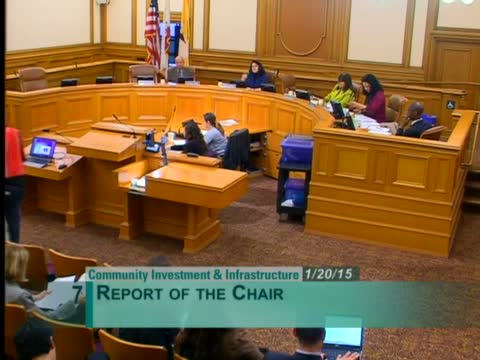
Lennar Urban has withdrawn its implosion permit for Candlestick Stadium and will proceed with conventional mechanical demolition, OCII staff told the Commission at its Jan. 20 meeting. The Commission received an informational briefing on demolition permitting, interagency review and environmental safeguards and then heard more than two hours of public comment from Bayview Hunters Point residents and advocacy groups demanding greater community participation in dust mitigation and detailed monitoring.
OCII senior project manager Tamsen Drew explained the permit process and OCII’s role as the lead agency for CEQA review within the project area. Staff told the Commission that the 2010 Final Environmental Impact Report analyzed mechanical demolition, and because Lennar withdrew the implosion alternative OCII is not preparing an addendum related to implosion. Staff outlined interagency routing for demolition permits — Planning Department consistency review, Building Inspection, Fire, Department of Public Works, Public Utilities Commission, Department of the Environment and Department of Public Health (DPH) for dust control — and said hazardous-material abatement would begin immediately with mechanical demolition work using high-reach excavators scheduled to run from late January through June, grading in July and retail construction to begin later in 2015 with a 2017 opening target for the retail center.
Residents and environmental justice groups said the debate over implosion highlighted deeper deficiencies in outreach and enforcement: Bayview Hunters Point speakers urged stronger monitoring at sensitive receptors, community access to real-time dust-monitor data, independent third‑party verification, and health‑protective action thresholds. "This was always about dust," said one community representative during public comment, urging that dust control be beyond bare regulatory compliance and include visible-dust response, recordkeeping, respiratory monitoring and community verification. Multiple speakers noted that Bayview Hunters Point is designated an air care zone with elevated asthma and cardiovascular disease rates and asked that community representatives be funded and empowered to monitor compliance.
Lennar officials said the conventional-demolition permit was issued on Jan. 13, that the implosion application will be withdrawn, and described the approved dust-control plan: a monitoring network including real-time PM2.5 and PM10 monitors, conservative action-level thresholds, daily third-party inspections, continuous wetting during crushing, pre-wetting of surfaces, stabilized truck routes and tire‑washing, stockpile management, and a 24‑hour community hotline that notifies project outreach staff and construction managers. "We do take dust control very seriously," said Bronson Johnson, Lennar’s director of land development, and noted monitors will be placed near sensitive receptors including schools and residences.
Commissioners pressed staff and Lennar for specifics: the Commission requested identification of the third‑party monitor contracted by DPH, clearer descriptions of DPH’s oversight role, and stronger multilingual outreach (including Tagalog and Chinese) and expanded mailed notices beyond online posting. OCII staff and Lennar committed to provide the approved dust-control plan to community members, to expand translated mailings and meetings, and to convene a follow‑up meeting with the Department of Public Health, Planning and Lennar — with Golden Gate University proposed as a neutral facilitator — to discuss monitoring details and community participation.
No formal action was required of the Commission on this informational item; commissioners asked staff to return with details about the third‑party monitor, DPH responsibilities, and follow-up community engagement.