Get Full Government Meeting Transcripts, Videos, & Alerts Forever!
Get email alerts on the Candlestick Implosion topic
No spam. Unsubscribe anytime.
Residents, health advocates urge OCII to reject implosion of Candlestick stadium and demand stronger outreach and scientific review
Summary
Multiple residents and public‑health advocates urged the Commission to oppose imploding Candlestick Stadium, citing air quality and health risks, inadequate outreach and the precautionary principle. OCII said demolition issues are not part of the Alice Griffith/Block 9 approvals and that EIR materials and addenda are publicly available.
During public comment the Commission heard numerous objections to a proposed implosion method for Candlestick Stadium and calls for more scientific review and community outreach.
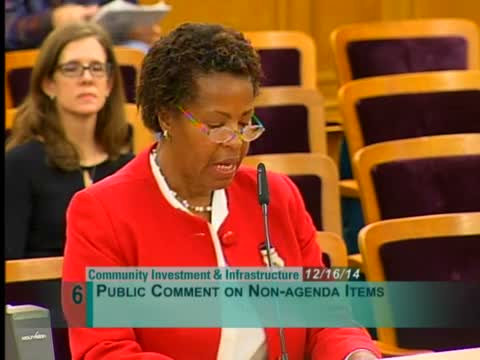
Speakers from neighborhood groups and public‑health organizations warned that implosion could produce hazardous dust plumes and long‑range particulate transport with health consequences for Bayview‑Hunters Point residents. "Imploding Candlestick Park Stadium will cause environmental harm, and health hazards and damage residents' homes," Shirley Moore, chair of the Candlestick Point Neighborhood Committee, said in public comment, invoking the city’s precautionary principle. Professor Tompkins and others with environmental health expertise urged the Commission to ensure independent scientific review and Air District involvement before approving any implosion method.
Several speakers said outreach to nearby residents had been limited and questioned whether planning‑department addenda and engineering analyses had been subject to adequate public review. "The public, we have never had an opportunity to review the documents," Professor Tompkins said, calling the addendum technically inadequate.
OCII staff responded on the record that the demolition method for Candlestick Stadium is not part of the loan amendments or schematic design items the Commission was voting on that day; staff noted the overall project has an environmental impact report and addenda that are available on OCII’s and the Planning Department’s websites and reiterated upcoming community meetings (a Dec. 17 community meeting and January CAC sessions) where demolition and related questions will be discussed.
Commissioners requested staff to provide a short written memo describing what was submitted to the Planning Department on the demolition method, how that submittal relates to prior approvals and whether further Commission action is needed. Several commissioners said they want to make sure the Air District and other technical reviewers have had or will have an opportunity to review demolition plans.
The Commission did not act on demolition method questions that day; the public‑comment period and the staff announcements made clear follow‑up community meetings and additional review are planned.