Get Full Government Meeting Transcripts, Videos, & Alerts Forever!
Get email alerts on the Code Enforcement topic
No spam. Unsubscribe anytime.
Commissions and public press enforcement readiness as short-term rental rules, illegal conversions and permit valuations draw scrutiny
Summary
Public commenters and commissioners pressed Planning and DBI staff on enforcement capacity, short-term rental legalization, illegal conversions of industrial buildings to offices, life-safety signage, and the need for audits and potential additional enforcement funding.
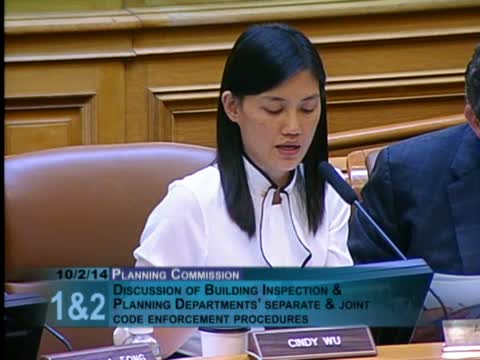
At a joint hearing, the Planning Commission and Building Inspection Commission spent substantial time on code enforcement concerns raised by staff, commissioners and members of the public—particularly the enforceability of newly proposed short-term rental rules and the prevalence of unreviewed changes of use.
Scott Sanchez, zoning administrator for the Planning Department, reviewed the department's enforcement authority (Planning Code Section 307) and administrative penalty provisions in Section 610 and Section 176. He said the Planning Department triages complaints, conducts site visits and coordinates with DBI and the City Attorney when violations persist. "Our highest priority is the loss of housing," Sanchez said, noting administrative penalties can be levied and an appeal process exists.
Public commenters raised a range of enforcement failures and risks. Alan Grossman said he had repeatedly sought public records about how the PPTS addresses urban-forest/tree-planting provisions. Sue Hester and others alleged whole buildings have been converted to office use without Planning review and urged the commissions to require routing of permits in industrial zones to Planning. "Right now, people can convert an entire building, or part of a building to another use without it ever being referred to planning," Hester said.
Labor and housing advocates urged that short-term rental legalization be enforced strictly to avoid "hotelization" of housing stock. Ian Lewis of Hotel and Restaurant Workers Local 2 said relaxing limits creates enforcement burdens and life-safety concerns for units treated as hotels, not residences. Charlie Goss of the San Francisco Apartment Association urged the commissions to address signage, posting and enforcement costs for life-safety requirements that resemble hotel rules.
Staff and commissioners debated practical enforcement mechanics for short-term-rental proposals that distinguish "hosted" and "non-hosted" uses. Sanchez said the department recommended a 90-day cap for non-hosted stays but noted the proposal under consideration includes unlimited stays for some hosted uses; he described a plan for a municipal registry and a one-year look-back report to evaluate enforcement performance.
Commissioners repeatedly returned to funding and capacity: DBI and Planning staff described multiple intake channels (311, counters, inspections) and noted that housing-unit inspections are on a five-year routine cycle for most apartment buildings but may be moved to more frequent cycles when conditions warrant. Several commissioners urged a formal audit of permit valuation and fee fairness, citing inconsistent reported valuation examples and the appearance that some expediters pull hundreds of permits while small homeowners wait months for approvals.
No formal votes were taken; commissioners asked staff to return with additional detail on enforcement procedures, registry mechanics and portal features that would assist enforcement and public monitoring.