Get Full Government Meeting Transcripts, Videos, & Alerts Forever!
Get email alerts on the Short Term Rentals topic
No spam. Unsubscribe anytime.
Commissioners press for enforcement plans as short‑term rental rules advance
Summary
Commissioners and DBI staff discussed enforcement challenges posed by short‑term rental listings and asked for a joint follow-up with Planning to develop clear protocols; staff said many listings lack addresses, complicating investigations, and pointed to pending amendments that will return to Planning and Code Advisory.
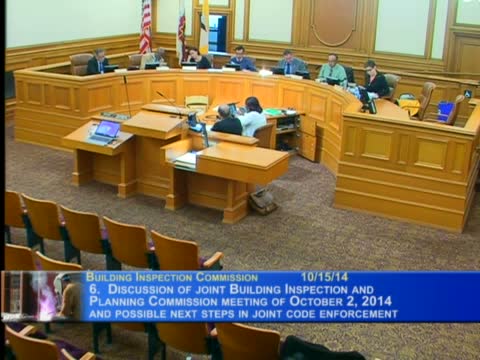
Commissioners used the Oct. 15 Building Inspection Commission meeting to press DBI and Planning staff for clearer code‑enforcement protocols tied to short‑term rentals and other change‑of‑use issues. Several commissioners said the Oct. 2 joint meeting with the Planning Commission exposed gaps about who handles investigations, how inspections are timed and how to protect public safety.
Rosemary Bosque, chief housing inspector, described practical hurdles: many online short‑term rental advertisements omit street addresses or deliberately obscure property identifiers, which makes it time‑consuming to trace listings to specific units. “What we're seeing is... they're getting smarter about not putting [an address] in front of the building on that listing,” Bosque said, explaining that staff sometimes must match photos to street scenes or send inspectors to confirm a property.
Bill Strachan and other staff noted that the short‑term rental file was heavily amended at the Board of Supervisors and that at least two substantive amendments were sent back to Planning and Code Advisory for additional review. Staff urged that DBI and Planning coordinate training and that DBI assist Planning where enforcement capacity is needed because the proposed ordinance would assign primary enforcement to Planning.
Public comment from Charlie Goss of the Apartment Association urged clarity about enforcement logistics for roughly 6,000 current listings and asked how DBI would verify posted egress maps and safety signage before the Feb. 1 effective date noted in the ordinance. Commissioners asked staff to work toward a joint public meeting and for draft protocols and staffing proposals so both commissions can vet the implementation steps before full enactment.
Commissioners also discussed the potential role of private code‑enforcement contractors and suggested including them in future agenda discussions; they asked DBI to supply an internal audit of permit fees and to prepare for the expanded enforcement scope if the ordinance’s geographic coverage is broadened beyond multi‑unit buildings.