Get Full Government Meeting Transcripts, Videos, & Alerts Forever!
Get email alerts on the Illegal Unit Legalization topic
No spam. Unsubscribe anytime.
San Francisco DBI outlines rollout for new voluntary legalization program and outreach to owners with open violations
Summary
DBI said May 21 that Supervisor David Chu’s legalization ordinance took effect May 17; the department has drafted a screening form, will mail informational packets to owners with open notices of violation, and will coordinate with Planning and the Rent Board to streamline the voluntary legalization process.
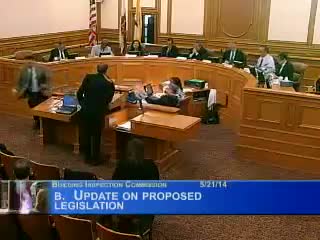
The Department of Building Inspection told the Building Inspection Commission on May 21 that a recently signed ordinance to allow voluntary legalization of certain accessory units is now in effect and that the department is preparing materials and outreach to help property owners apply.
Bill Strachan, DBI’s legislative and public‑affairs representative, said the measure by Supervisor David Chu "did pass, the mayor signed it, it actually took legal effect on the seventeenth." DBI staff said they have drafted a screening form and are meeting with the supervisor’s office, Planning and the Rent Board to finalize the application package.
"We have a group that's been meeting with the supervisor's office, and members of planning and the rent board and some other interested and involved participants in this review process," Strachan said, adding that the department is finalizing documentation to make legalization "a relatively smooth and seamless process for anybody who does choose to come forward and try to legalize units."
Commissioners and staff discussed how to reach property owners who already have open notices of violation (NOVs). Rosemarie Bosque, Chief Housing Inspector, said DBI will mail informational packages to property owners with outstanding NOVs and will ask the Rent Board to share notices of cancellation or withdrawal so DBI can identify properties that may be eligible for the program.
"One of the things that we're going to have to now look at is of those cases where we wrote notices of violation for illegal units, how many of those property owners are going to avail themselves of the opportunity of legalizing a dwelling unit," Bosque said. "So we will be doing a mailing to them directly on that legislation."
DBI staff warned that the legalization process will interact with other city departments and with code‑enforcement timelines. Several commissioners noted that when owners apply to Planning, cases can remain in planning review for months and that DBI must determine how to treat NOVs that are effectively paused while another department reviews a permit. Staff said they will categorize NOVs as active, inactive, in planning or referred to the City Attorney to improve tracking and determine next steps.
The department also signaled it would include guidance for interim safety measures — such as smoke detectors and carbon monoxide alarms — in outreach materials and in screening guidance for applicants. Staff emphasized that the legalization path is voluntary and that code enforcement actions remain in place when there are imminent safety hazards.
Next steps: DBI said the screening form and informational package are being finalized; outreach mailings will follow. Staff committed to coordinating with Planning and the Rent Board as the program is implemented and to reporting back to the commission on progress in coming months.