Get Full Government Meeting Transcripts, Videos, & Alerts Forever!
Get email alerts on the Code Enforcement Heat topic
No spam. Unsubscribe anytime.
DBI says tightened time frames speed heat‑violation closures; commissioners weigh stiffer penalties and policy changes
Summary
DBI presented a case-study showing daily inspector follow-up on heat complaints and reported 551 alleged heat violations since Jan. 2012 with about 94% now closed; commissioners discussed administrative penalties, targeted enforcement, and interim mitigation while residents criticized enforcement delays.
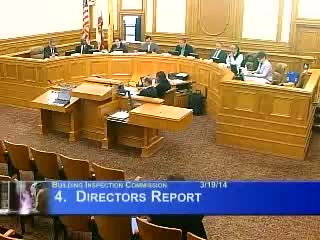
Rosemarie Boske, chief housing inspector at the Department of Building Inspection, told the commission on March 18 that from Jan. 1, 2012, through February the department logged 551 alleged heat violations and has closed roughly 94 percent of those cases, leaving about 36 still open. Boske walked commissioners through a weeklong case study showing inspectors visiting a residential hotel multiple times, issuing a two‑day notice of violation and, when repairs lagged, scheduling a director’s hearing and assessing costs.
That sequence — complaint on Sunday, inspector visits Monday, notice posted Tuesday, director’s‑hearing process initiated by Thursday — illustrated the department’s shortened compliance time frames adopted in response to prior problems, Boske said. She described the approach as resource‑intensive and noted the department cannot provide that level of daily attention for every complaint: “There just isn’t the resources,” she said.
Why it matters: commissioners said heat failures and elevator outages can quickly become life‑safety issues for elderly or mobility‑limited residents in SROs and other multiunit housing. The commission pressed staff on alternatives to the current remedies, which rely heavily on inspections, assessment of costs and, in persistent cases, city‑attorney litigation.
Discussion and options: DBI staff and commissioners explored legislative and procedural options. Deputy Director Dan Lowry noted the housing code’s Section 204 provides for infraction or misdemeanor citations but that courts and resource constraints make that route slow and often unrewarding. Commissioners asked whether administrative penalties or staged escalating fines might spur faster repairs; staff said such changes would require amendments to Chapter 1A of the building code and the housing code and would likely use the director’s hearing as the evidentiary forum.
Residents’ perspective: Public commenters pressed the commission for faster relief. Sandy Burnback said a director’s hearing in her case was canceled and questioned whether an assessed “cost” functions as a real deterrent for landlords; she also asked how quickly the department’s reported 94 percent closure rate actually occurs and said her heat outage lasted seven days.
Interim relief and practical barriers: Staff said approved interim measures — for example, permanently installed portable heaters approved with a permit and UL‑listed equipment — can be used temporarily but do not replace a permanent heating system. Plumbing and parts availability for antiquated boilers are practical constraints; staff noted it can take time to find parts or licensed contractors able to complete repairs.
Next steps: Commissioners and staff agreed to continue work on defining criteria for targeted escalation (for example, serial offenders or life‑safety cases), to refine director’s‑hearing procedures (a proposed pre‑hearing form to document owner action and evidence), and to consider legislative changes as part of a broader strategic plan tied to the elevator working group and other code‑enforcement priorities. The commission asked staff to return with more specifics on options and legal implications.