Get Full Government Meeting Transcripts, Videos, & Alerts Forever!
Get email alerts on the Notices Of Violation topic
No spam. Unsubscribe anytime.
DBI reports on notices of violation: inspectors, backlog and second-notice referrals
Summary
DBI told the Building Inspection Commission it is addressing a long-running inventory of open cases while processing roughly 5,000 new complaints a year. Staff reported about 4,042 open cases in the housing division and described recent NOV counts and steps to add inspectors and use litigation referrals for repeat violators.
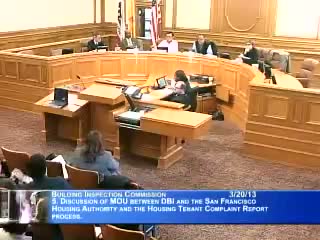
At the March 20 meeting the Building Inspection Commission received a detailed update on notices of violation (NOVs), open case inventories and code-enforcement procedures.
Rosemarie Boske and Acting Deputy Director Daniel Lowery described current caseloads and how DBI distinguishes between housing-division cases and code enforcement. Boske said the housing division is carrying roughly 4,042 open cases in the combined timeframes and that about 1,845 are cases that arrived in the previous two years; she noted DBI receives approximately 5,000 new complaints a year and has been able to reduce older backlogs while juggling seasonal issues and limited inspector staffing.
Lowery described NOV handling across the department. "Notice of violations are official citations to document the conditions and situations that do not comply with the San Francisco building, plumbing, electrical, mechanical, and housing codes," he said. For 2012, Lowery reported about 332 first notices and 181 second notices referred to code enforcement; for the current year between January and March he reported 195 first notices and 19 second notices. Lowery explained that DBI keeps first notices open when applicants show a path to compliance (plans filed or permits in progress) and issues a second notice when compliance does not move forward.
Commissioners asked how DBI identifies repeat violators. Staff said DBI runs property-level tallies (properties with three or more open housing cases are flagged) and refers chronic cases to the City Attorney when appropriate; DBI gave the Grand Southern case as an example of a property referred because repeated fixes failed and conditions recurred. Staff emphasized distinguishing an "open" case from a true backlog: cases with documented, active follow-up may remain open while DBI awaits permit approvals or planning sign-offs.
DBI told commissioners it has recently initiated recruitments for additional housing inspectors (a recruitment closed recently and about seven or more hires were anticipated) and plans to add staff to the code enforcement division to help move cases to Director's Hearings and abatement when necessary.
Public commenters urged administrative fixes such as automatically reconciling NOV closures when the related permit is closed and consolidating multiple NOVs by address to identify serial violators sooner. The commission asked DBI to return with additional breakdowns and suggested improved tools and computer printouts to monitor NOV timelines and identify older unresolved Director's Hearings for referral.