Get Full Government Meeting Transcripts, Videos, & Alerts Forever!
Get email alerts on the Language Programs topic
No spam. Unsubscribe anytime.
Longfellow parents, teachers and students urge SFUSD to lift Filipino program enrollment cap
Summary
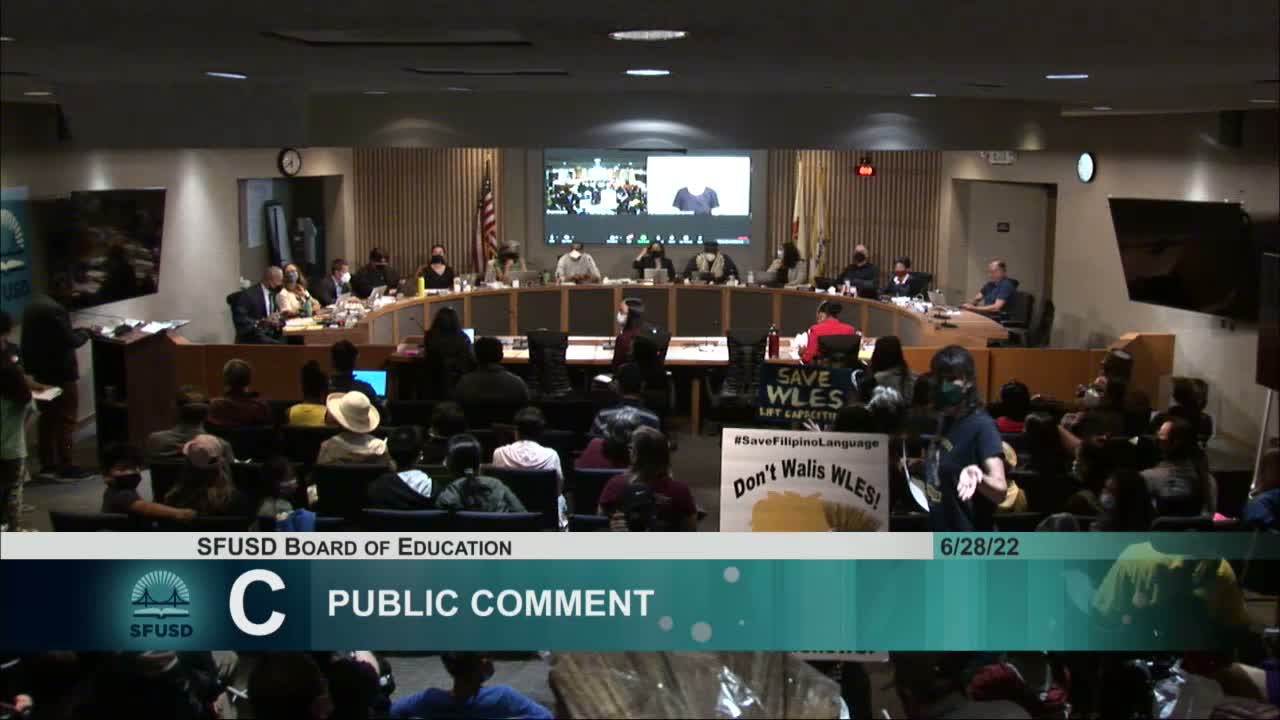
Dozens of Longfellow Elementary families, alumni and staff told the Board of Education on June 28 that an enrollment cap on the school’s Filipino language program (described by speakers as one of two in the nation) is inequitable and threatens the program’s survival; the board heard requests for the Executive Placement Center and superintendent to reverse the cap.
A sustained block of public comment at the June 28 board meeting was devoted to an enrollment cap imposed on Longfellow Elementary School’s Filipino language/Willes program. Dozens of parents, teachers, alumni and students described the cap as an existential threat to a culturally specific language and heritage program and asked the district to remove it.
Doug Pansiano and multiple Longfellow parents told the board the cap was applied despite community requests and that the Executive Placement Center canceled a June 27 meeting with families. Teachers and program alumni described the program as a vital cultural home and said the district’s suggested alternative placements (such as Bessie Carmichael) were not viable for many Southeast San Francisco families because of distance and logistics.
Principal Jennifer Freeman and district staff said the district’s fiscal and capacity concerns were the basis for the cap and that EPC had declined an additional meeting because staff believed there was no new material to add; Freeman said the process has left families ‘‘traumatized’’ and urged additional engagement. Community members urged removal of the cap to preserve the only Filipino language program in the region and asked for transparent metrics and a plan to expand access.
The board did not take an immediate vote to change the cap during the meeting; staff indicated EPC and the superintendent were aware of the community’s concerns and would continue to discuss possible adjustments. Public commenters emphasized equity, cultural preservation and the need for accessible district processes.