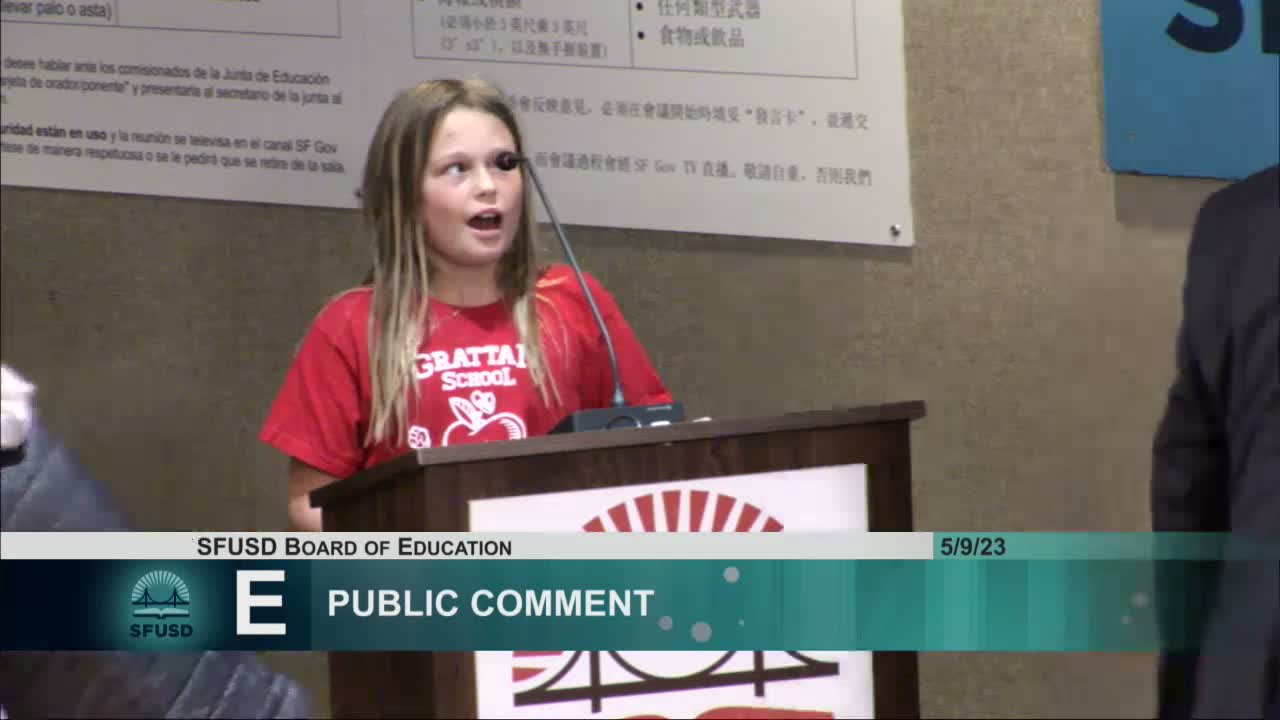
SFUSD public commenters and union press board for paraeducator raises and staffing fixes
Loading...
Summary
Dozens of paraeducators, teachers and parents told the San Francisco Board of Education the district faces a para shortage and urged the board to back UESF’s economic proposal—including a $30/hour starting wage—to recruit and retain staff and reduce safety risks.
Dozens of paraeducators, teachers and parents told the San Francisco Board of Education on May 9 that chronic vacancies and low pay are undermining classroom safety and students’ access to services and urged the board to adopt the United Educators of San Francisco (UESF) bargaining proposal.
During an extended public-comment period, paraeducators and family members described classrooms with no consistent one-on-one support, unpaid overtime, and staffing shortfalls that left teachers alone with students with high support needs. Diana Mueller, a paraeducator and UESF bargaining-team member, said she brings home about $28,000 a year and that classified staff “do not get paid during summer vacation,” arguing that one job should be enough.
Several speakers asked the board to support a UESF proposal to raise starting pay for paraeducators to $30 an hour. Chris Klaus, a special-education teacher and UESF bargaining team member, said bargaining has stalled and urged the district to come to the table ready to settle wages and class-size proposals. Cassandra Curiel, president of UESF, summarized the union’s position and called for urgency: “We have come with solutions… all we're asking for is a willing partner across the table to come and address those solutions.”
Parents and teachers described concrete safety incidents and missed Individualized Education Program (IEP) minutes because of staffing gaps. Amy Clark, a parent, said her child qualified for full-time para support but had none until the day of the meeting, when partial hours were finally provided. Multiple speakers tied improved para pay to filling vacancies and reducing the district’s reliance on short-term or substitute staff.
Board members did not take a formal vote on wages at the meeting, but the public comments underscored bargaining urgency. Superintendent Wayne, in a separate agenda item, reported ongoing labor negotiations and said the district planned to implement negotiated salary increases; he said staff and district leaders were working on timelines to resolve outstanding collective-bargaining issues.
The board received a mix of testimony from individual classroom staff, union leaders and parents urging both near-term corrective actions (such as filling vacancies and improving payroll responsiveness) and long-term bargaining settlements to set a livable wage for paraeducators. Several speakers tied improved staffing to school safety and students’ legal entitlements under their IEPs. The board moved on to other agenda items without adopting the union’s wage proposal on the record.