Get Full Government Meeting Transcripts, Videos, & Alerts Forever!
Get email alerts on the Housing MOU And NOVs topic
No spam. Unsubscribe anytime.
DBI reports faster housing‑authority responses under new MOU and intensifying effort to clear outstanding violations
Summary
DBI and the San Francisco Housing Authority described a February MOU that sped responses for public‑housing complaints; DBI said it has materially reduced open notices of violation through targeted cleanup and litigation, including an $800,000 settlement with a repeat offender.
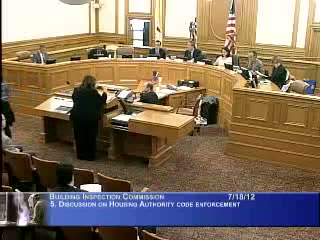
The Building Inspection Commission reviewed a pair of enforcement updates on July 18: DBI’s housing inspection division reported quicker, coordinated responses under a February memorandum of understanding with the San Francisco Housing Authority, and DBI described ongoing work to reduce a large backlog of outstanding notices of violation.
Rosemary Bosque, chief housing inspector for DBI, told commissioners the MOU established a protocol for transmitting housing complaints quickly to designated Housing Authority staff and counsel. "Since that time, we have had about 173 complaints received from occupants in those types of buildings," she said, and most complaints involved mold, mildew, hot water and plumbing; only one of those 173 cases remained active at the time of the hearing.
Barbara Smith, who oversees public‑housing operations for the San Francisco Housing Authority, said the authority faces funding and staffing constraints—properties are older and needs exceed available capital—but welcomed the MOU and said the authority is improving work‑order monitoring and prioritization. She told the commission the authority had roughly $240 million in immediate capital needs and had reduced staff from about 400 to 300 in recent years.
On the broader backlog, Deputy Director Ed Sweeney said DBI identified roughly 11,000–12,000 outstanding complaints and notices and focused first on low‑hanging fruit (complaints that led promptly to permits). He said the department has reduced many older cases through targeted follow‑up and expects a substantial additional decline after continuing district reviews. "If you give inspection services another five or six months, the number should be quite low," Sweeney said.
Bosque also described case‑management changes: shorter timeframes for heat violations, doubled director hearing capacity for referrals, a streamlined City Attorney referral form, and more proactive pursuit of property owners with multiple violations. She highlighted a recent pretrial settlement in a multi‑property enforcement case, describing an $800,000 agreement with a property owner who held multiple problematic units.
Several public commenters from Bayview described long case histories for nearby properties and asked for stronger geographic triage and follow‑up; commissioners and staff discussed the tradeoffs of centralized triage versus retaining housing division continuity for housing‑code cases. Staff said new Accela permit‑tracking tools under test should improve cross‑division reporting and case monitoring.
Next steps: DBI will continue district‑by‑district cleanup, integrate improved reporting under Accela, and report progress to the commission.