Get Full Government Meeting Transcripts, Videos, & Alerts Forever!
Get email alerts on the ADA Small Business topic
No spam. Unsubscribe anytime.
DBI and small‑business office discuss ADA guidance, CASP inspections and ways to reduce predatory suits
Summary
DBI staff, the mayor's Office of Small Business and commissioners discussed how Certified Access Specialist (CASP) training, interdepartmental coordination and possible state changes (SB 1608) can give small businesses clearer compliance paths and reduce costly ADA litigation; DBI plans trainings and technical guidance to help businesses.
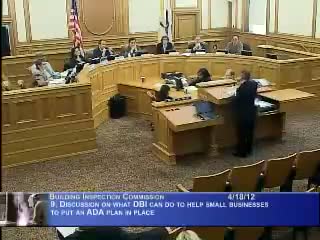
San Francisco — Commissioners, DBI staff and the mayor's Office of Small Business convened April 18 to discuss ways DBI can help small businesses produce ADA compliance plans and limit exposure to lawsuits.
Tom Huey (Deputy Director, PEM Review Service) described forthcoming ADA training for DBI staff and DBI's technical counter services for small businesses. "We will have upcoming training regarding the ADA requirement," Huey said, and acknowledged limited staff capacity for proactive outreach while promising improved guidance at the counter and brown‑bag training sessions.
Regina Dickendresi, Director of the Office of Small Business, said businesses want "assurity" that the steps they take are consistent with federal and state requirements and not subject to varying individual interpretation. She suggested strengthening SB 1608 and state protections so private CASP inspections can give businesses more confidence and reduce predatory lawsuits.
Commissioners discussed whether DBI could offer a fee-based inspection or review service to validate private CASP inspections; DBI staff and building officials argued that inspectors should not both prepare plans and inspect them due to conflict‑of‑interest concerns. Director Day and staff said DBI can provide technical advice at counters, develop handouts and run targeted trainings once CASP staff return from medical leave and more staff are trained.
Commissioners and staff agreed to convene an interdepartmental group including the Access Appeals Commission, Planning and Public Works, and the mayor's Office on Disability to explore site‑specific barriers (front‑door thresholds, historical facades) and potential mitigations such as portable ramps, permit processes and state legislative fixes.
What happens next: DBI plans to expand staff CASP training, provide counter technical assistance and coordinate an interagency meeting to identify practical solutions for small businesses and disabled access issues.