Get Full Government Meeting Transcripts, Videos, & Alerts Forever!
Get email alerts on the Life Safety Repairs topic
No spam. Unsubscribe anytime.
DBI faces criticism over delayed repairs after tenant spent days without heat at 570 O'Farrell
Summary
A tenant and DBI staff clashed over the department’s ability to compel repairs after a resident at 570 O'Farrell reported up to eight days without heat; DBI said it is pursuing an action plan with the owner, explained limits of emergency orders and described the repair-and-demolition fund and lien process.
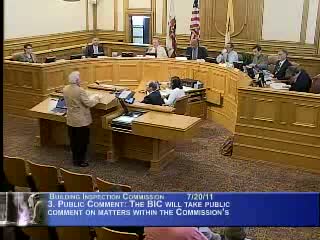
A tenant and city inspectors clashed over how quickly the Department of Building Inspection (DBI) can force repairs after a resident at 570 O'Farrell told the Building Inspection Commission she went eight days without heat and five days without hot water. "An NOV was issued on 05/24...as of the close of business yesterday, nothing has been done," resident Sandy Bernbach said during public comment, pressing staff to explain what the phrase "at once" on a DBI notice of violation requires.
Deputy Director Ed Sweeney told the commission that DBI reserves emergency orders for "extreme life-safety hazards" such as possible collapse, and that only after an emergency order could the department carry out repairs itself and recover costs through liens. Chief Plumbing Inspector Steve Penelli said his inspection found the building's boiler is old but running and that the owner reports tight finances and is pursuing financing and bids. "I've given her a deadline...to come back to me with a plan," Penelli said, adding DBI would pursue a director's hearing or referral to the city attorney if the owner fails to act.
Chief Housing Inspector Rosemary Bosque explained the legal standard for emergency orders under chapter 1A of the building code: the director must find a "serious, imminent" hazard before invoking emergency powers, which waives an administrative hearing but requires immediate recording of the order and a short window for owners to act. Bosque said DBI responds to life-safety complaints, including heat issues, and tries to inspect within 24 hours when practicable, but access to boiler rooms, time clocks or thermostats can delay immediate action.
Commissioners pressed DBI for data on how frequently central heating failures occur citywide; staff said the system includes roughly 6,000–7,000 boilers and receives about 50 boiler-related complaints a year where owners report no heat or hot water. DBI staff acknowledged that replacing large central systems is expensive and time-consuming, often complicated by asbestos abatements and limited contractor availability—factors contractors echoed during public comment.
The commission also discussed whether the city should expand policies or funding so DBI could step into the role of repairs in more cases. Staff and several commissioners cautioned that doing so would require substantial up-front budget authority and legal safeguards; DBI currently relies on the repair-and-demolition fund (quoted in the meeting at about $300,000) and then uses liens and the annual lien cycle before the Board of Supervisors to recoup expenses.
Next steps: DBI committed to obtain a specific action plan and timeline from the owner of 570 O'Farrell and to provide commissioners with code-enforcement complaint numbers on life-safety issues. The commission did not take new formal action at the meeting.