Get Full Government Meeting Transcripts, Videos, & Alerts Forever!
Get email alerts on the Inspection Tracking topic
No spam. Unsubscribe anytime.
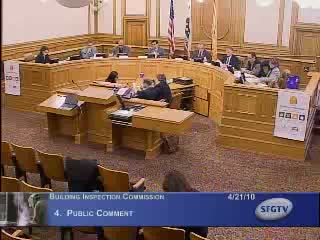
Housing division explains inspection‑tracking system, flags staffing and 3‑1‑1 impacts
Summary
DBI’s Chief Housing Inspector described how the complaint‑tracking system counts inspections, said planned computer upgrades aim to count individual NOV items and support reinspection work, and warned staffing cuts and 3‑1‑1 rollout could strain services.
The Housing Division presented its method for tracking inspections and warned commissioners that staffing cuts and external factors such as the 3‑1‑1 rollout could increase complaint volumes and strain enforcement capacity.
Rosemarie Boske, chief housing inspector, told the commission that the division uses the department‑wide complaint‑tracking system as the authoritative source for inspection counts. The system uses specific abatement‑type codes to determine whether a recorded field visit is counted as an inspection; letters sent for "pre‑scheduled inspection no entry" trigger a count even if the owner does not meet the appointment. "The method that the housing inspection division uses to track the number of inspections... is directly related to the department wide complaint tracking system," Boske said.
Boske described a long wish list for a new complaint‑tracking system: the ability to count each item on a notice of violation (NOV), to present checklists organized by building geography for room‑by‑room inspections, and to reduce clerical duplication through automation. She told commissioners that some enforcement tasks are especially labor intensive — subpoenas and litigation referrals, large room‑by‑room inspections at residential hotels, and case management for repeat violators. She cited a draft fee change (a $52 monthly carrying fee for open code‑enforcement cases) that will require reliable data entry and activity reporting.
Commissioners asked whether routine letters and boilerplate are translated for limited‑English property owners; Boske said the department does not currently translate these materials and would welcome commission guidance. On repeat violators she said property owners with recurring problems are often referred to the City Attorney and the litigation committee; reinspection intervals normally allowed by code (up to five years) can be shortened to one to three years when needed.
Public commenters raised related concerns: one speaker urged attention to reduced counters and check collection as staff shrink, and Jeff Buckley of the Tenderloin Housing Clinic urged DBI to delay raising inspection targets until the 3‑1‑1 system’s effect on complaint volume is known. "I'm here basically because I'm concerned about the integrity of the complaint system," Buckley said, and warned that 3‑1‑1 could dramatically increase complaints to certain districts.
Boske said the division tracks about 70 active items weekly to monitor performance and is working with MIS to automate scheduling and reporting where possible.