Get Full Government Meeting Transcripts, Videos, & Alerts Forever!
Get email alerts on the Special Education topic
No spam. Unsubscribe anytime.
SFUSD special-education advisory panel urges dyslexia screening, staffing and targeted interventions
Summary
The Community Advisory Commission on Special Education presented 2019–20 priorities — including full implementation of dyslexia guidelines, expanded evidence-based reading interventions (SPIRE/Wilson), and more paraeducators — and parents and teachers urged action on unfunded mandates and intervention minutes.
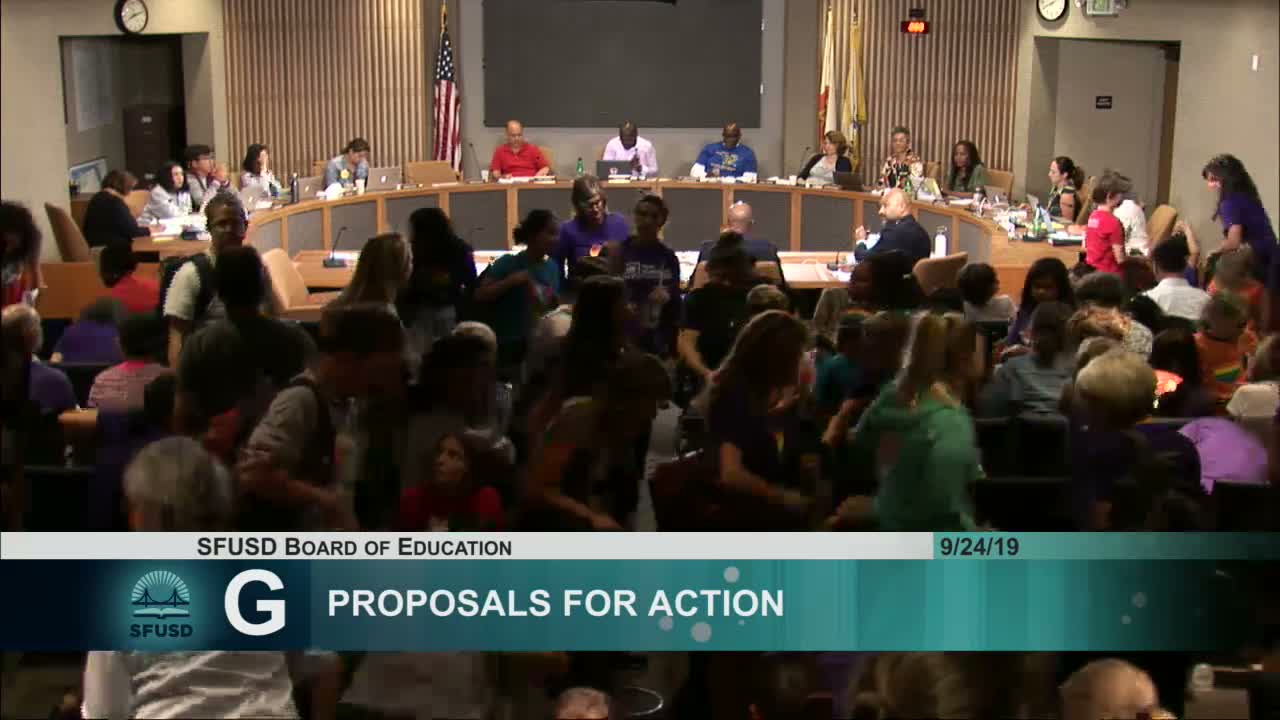
The Community Advisory Commission on Special Education (CAC) briefed the San Francisco Board of Education on Sept. 24 about priorities for the 2019–20 school year, urging the district to adopt research-based dyslexia screening and interventions, bolster math supports, address chronic absenteeism, and fill paraeducator and special-education vacancies.
CAC speakers described concerning performance indicators for students with disabilities on the California School Dashboard and recommended full implementation of the California dyslexia guidelines, early identification in kindergarten and first grade, and evidence-backed interventions such as SPIRE and Wilson. CAC leaders asked the board to convene curriculum staff with UCSF researchers to align screening and intervention tools for SFUSD.
Public commenters amplified the urgency. A parent advocate and CAC member cited a documentary and research arguing that balanced-literacy practices are insufficient for students with dyslexia and urged the board to disrupt established approaches. A district special-education teacher described caseload increases and possible reductions to a 180-minute tier-3 intervention (AB 1369), warned of high numbers of provisional and emergency credentials in special education, and cited the district’s estimated $41 million in federally unfunded special-education costs.
Board members thanked CAC presenters and asked staff to follow up. Commissioners noted the need for expanded training, systemic multi-year financial planning to address funding shortfalls for special education, and public CAC events (including an October panel on dyslexia screening) to increase board and public understanding.
The CAC presentation included requests for targeted universalism — ensuring the right number of special-education staff and trained general-education teachers at each site — and asked the board to consider expanding SPED-related trainings and IEP supports across middle and high schools where reading and math gaps are largest.
District staff offered to provide follow-up data and to coordinate with UCSF and curriculum staff to develop practical screening and intervention tools for districtwide use.