Get Full Government Meeting Transcripts, Videos, & Alerts Forever!
Get email alerts on the Arts Education topic
No spam. Unsubscribe anytime.
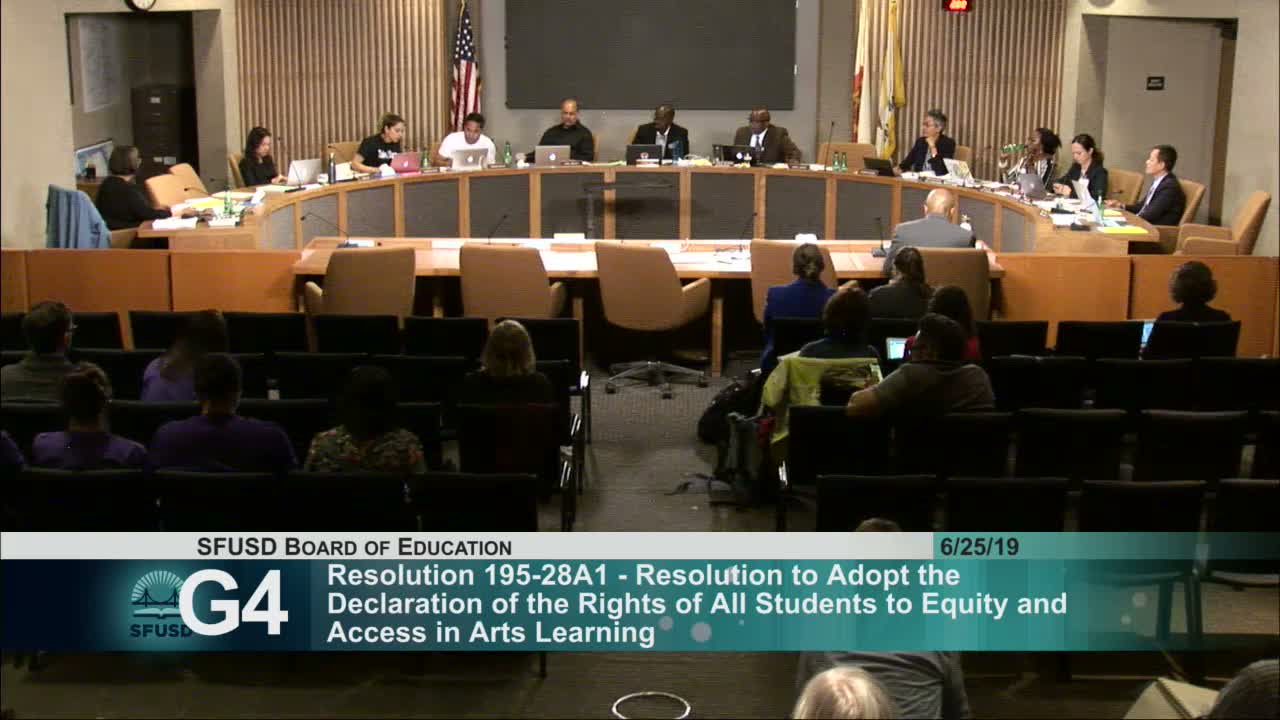
Board adopts arts-equity declaration to expand VAPA access across SFUSD
Summary
The board approved a resolution recognizing arts learning as essential to a comprehensive education and directed staff to plan for full-time VAPA teachers at elementary sites, measure arts participation and prioritize equity in arts programming.
The San Francisco Unified School District Board of Education on June 25 adopted a resolution declaring students' rights to equitable access to arts learning (visual and performing arts, music, dance and media arts) and directed central office staff to prepare implementation plans, fiscal analyses and phased rollouts.
The resolution (read and amended during committee) asks the district to ensure every elementary school has at least one full-time VAPA teacher and to maintain and expand music programming across middle and high schools. It calls for instruments and materials to be provided at no cost to students, inventories and maintenance plans for district instruments, and periodic program evaluations every three years. The district will prioritize underserved schools and coordinate with the Public Education Enrichment Fund (PEAF).
Speakers included arts teachers and providers who both welcomed the commitment and urged careful implementation that preserves existing site partnerships and avoids unintended disruption to successful school-based arts programs. One long-serving VAPA teacher warned that a restructuring should not “rip the heart from VAPA” and asked for teacher input in planning.
The resolution instructs the superintendent to conduct a detailed fiscal impact analysis, identify potential PEAF resources or reallocations, and return with prioritization recommendations. It also requires that labor-relations implications be addressed consistent with collective-bargaining agreements.
Board members emphasized teacher and site-based input during rollout and pledged to focus initial investment on schools and populations with the least current access. The resolution passed by roll call.