Get Full Government Meeting Transcripts, Videos, & Alerts Forever!
Get email alerts on the Permit Processing topic
No spam. Unsubscribe anytime.
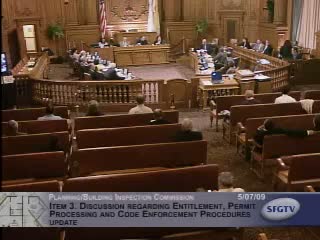
Commissioners press for streamlined entitlement reviews and stronger enforcement tracking
Summary
Planning and DBI outlined the complex entitlement vs. building-permit process and limits on enforcement; commissioners urged more field inspections, clearer case management, and consideration of user‑facing reforms to reduce delays and repeated routing between departments.
Planning Department neighborhood planning director Kelly Amder and Department of Building Inspection deputies told the commission the entitlement process (approvals that typically require hearing) differs from building permits and that routing between Planning and DBI involves many steps and handoffs. “There’s over 50 steps,” Amder said, describing how an application goes from DBI intake to the Planning Information Counter and neighborhood planning quadrants for review.
Officials acknowledged that the system’s complexity allows some matters to “fall through the cracks.” DBI deputy Lawrence Kornfield said both departments are meeting to improve routing and that the goal is to see plan-check conditions surfaced to field inspectors. “We’re trying to resolve the issues about making sure that we route back to planning any permits when we’re doing plan check where there have been changes,” Kornfield said.
Commissioners raised code-enforcement issues, including inconsistent inspector interpretations and limited district staffing: DBI described 18 districts with varying inspector coverage and said complaint handling is concentrated in district inspectors. Staff said the agency recently laid off positions and faces large caseloads; commissioners suggested targeted staffing or commission-funded positions for improved code enforcement.
Members of the public urged simplification, quicker letters of determination and use‑case processing (type-based rather than neighborhood‑only) to speed simple remodels. Several architects and community stakeholders asked for stronger penalties for repeat offenders and a user-focused permit counter to reduce repeated routing. Planning and DBI said the new PPTS system will aim to log conditions and create project-based histories that could reduce repeated handoffs.