Get Full Government Meeting Transcripts, Videos, & Alerts Forever!
Get email alerts on the Early Education Kindergarten Readiness topic
No spam. Unsubscribe anytime.
SFUSD presents kindergarten‑readiness data; early‑education staff urges scaling pre‑K supports
Summary
SFUSD early‑education leaders presented new kindergarten‑readiness indicators and KRI results on April 23, reporting benefits for students with two or more years of pre‑K, noting demographic disparities (with Hispanic/Latino lagging trends), and outlining strategies to reduce chronic absenteeism and expand family supports.
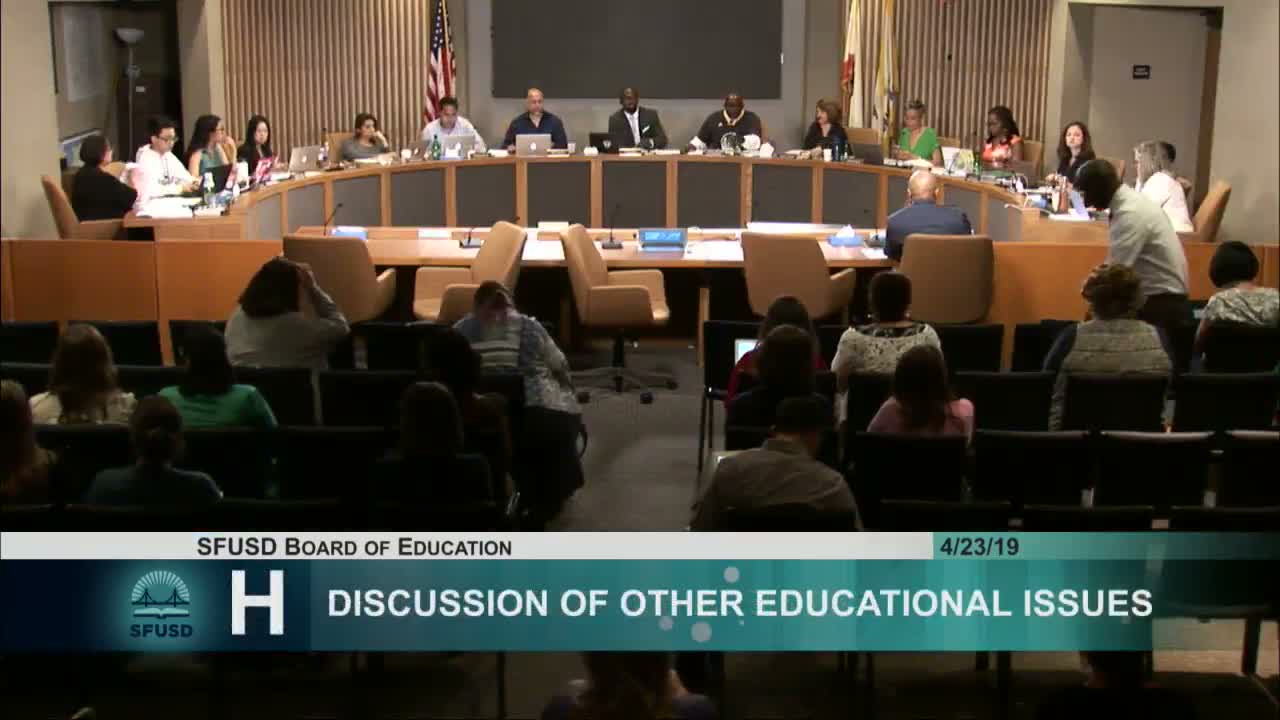
SFUSD’s early education team presented kindergarten‑readiness data and implementation plans to the Board of Education on April 23, highlighting the district’s pre‑K to 12 alignment work and new assessment tools intended to inform instruction and family outreach.
Chief of Early Education Mina Yashar told commissioners the district serves roughly 1,500 preschool students, about 400 transitional‑kindergarten students and 4,000 kindergarten students in SFUSD programs and emphasized that longitudinal data are now informing targeted practice. "We are proud to be a pre K to 12 school district," Yashar said, noting the department’s expanded leading indicators that incorporate social‑emotional and cognitive measures in addition to literacy.
Presenters showed that students with two or more years in SFUSD pre‑K outperform peers on the leading readiness indicators and that early‑education investments and aligned curricula are being rolled out in cohort schools. The KRI (kindergarten readiness inventory) lagging indicator showed upward trends for African American, Asian and white students, and a negative trend for Hispanic/Latino students; district staff pledged to disaggregate data further and identify targeted supports. The presentation also called attention to chronic absenteeism in preschool (with higher rates reported for some groups) and outlined actions including family‑engagement strategies, health‑nurse partnerships, and professional learning communities to reduce absence and improve transitions.
Community partners — including First 5 San Francisco and Mission Promise Neighborhood — praised the annualized assessment and urged continued alignment across community preschools. Board members asked for deeper disaggregation (e.g., Pacific Islander, Filipino) and benchmarking on chronic absenteeism versus peer districts. Staff committed to return with more disaggregated data, comparative absenteeism metrics and implementation measures for scaling successful site practices.