Get Full Government Meeting Transcripts, Videos, & Alerts Forever!
Get email alerts on the Parcel Tax Audit topic
No spam. Unsubscribe anytime.
Parcel Tax oversight committee reports clean audit, urges long‑term sustainability planning
Summary
The Parcel Tax Oversight Committee told the SFUSD Board on April 23 that independent auditors issued a clean (unmodified) opinion for the parcel tax funds (QTEA/Prop A), found no audit findings, and recommended continued prioritization of teacher compensation while planning for future revenue cliffs.
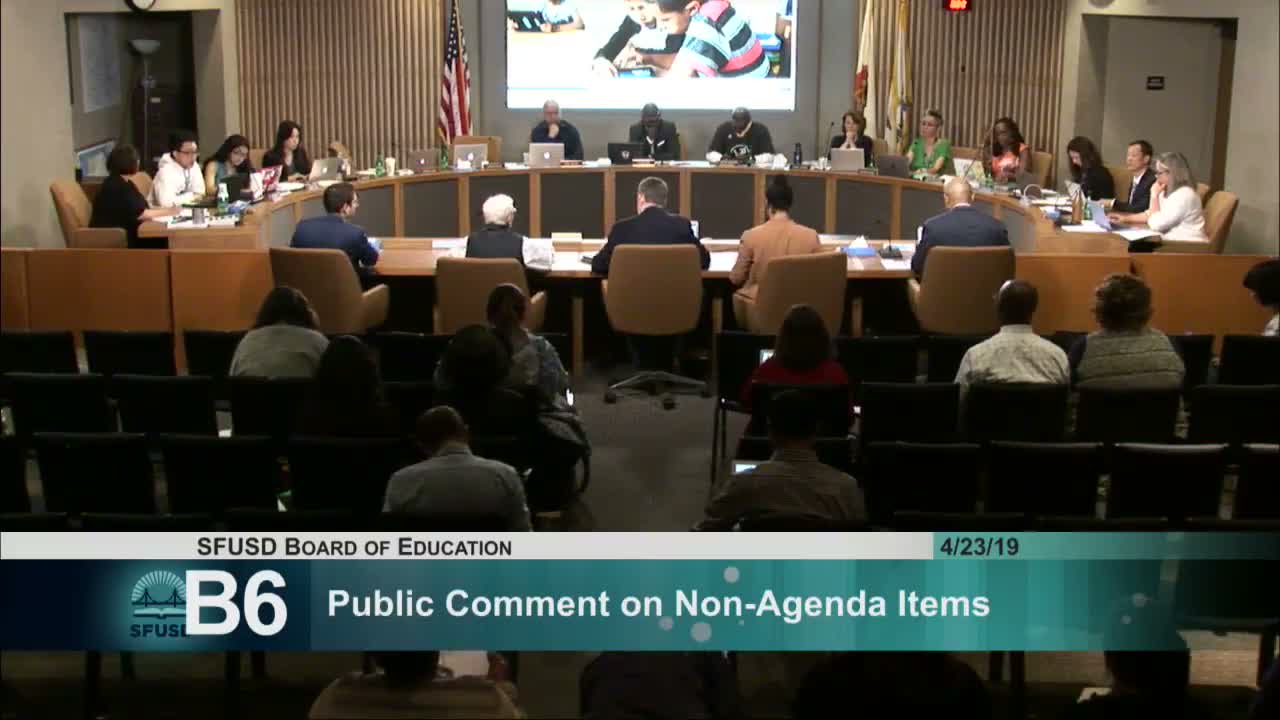
An independent auditor and the Parcel Tax Oversight Committee reported a clean audit and urged board attention to long‑term sustainability for parcel‑tax funds at the April 23 San Francisco Unified School District board meeting.
Nathan Edelman, the committee’s independent external financial auditor, told the board the audit produced a “clean or unmodified audit opinion” and that the procedures found the district’s parcel‑tax accounting to be complete and consistent with the ballot language. "The results of the audit are that the funds were spent in accordance with the ballot language," he said.
Co‑chair Leah Vandermey summarized the committee’s 10‑year review, saying parcel‑tax revenue has been used largely for teacher compensation (about 71% under the MOU) and a smaller share for technology and district priorities (about 29%). Richard Shreve, co‑chair, noted the committee is studying carryover trends—particularly in the technology bucket—and emphasized the committee’s core charge to ensure expenditures align with voter intent.
Committee members provided headline metrics cited during the presentation: staff said roughly 99% of teaching positions were filled on the first day of school and a 91% retention rate, indicators the committee used to judge some effects of compensation investments. The committee also recommended the board consider alternate revenue sources and to accelerate planning for programs affected if parcel‑tax revenue were to decline.
Board members asked the committee to return with additional analysis on the impact of hard‑to‑fill and hard‑to‑staff stipends at targeted schools, and to provide the detailed spreadsheets and metrics the committee uses to verify compliance with ballot categories. The committee agreed to add those items to a future meeting agenda.
No formal board action was taken that evening; the presentation was informational and will inform future budget and policy discussions.