Get Full Government Meeting Transcripts, Videos, & Alerts Forever!
Get email alerts on the Middle School Redesign topic
No spam. Unsubscribe anytime.
SFUSD presents middle‑grades redesign, cites early reading gains in pilots
Summary
District leaders outlined a phased middle‑grades redesign centered on deeper learning, block scheduling, acceleration courses and equity. Staff cited preliminary literacy gains in pilot acceleration classrooms and outlined a three‑year phased rollout starting with two pilot schools in 2019–20.
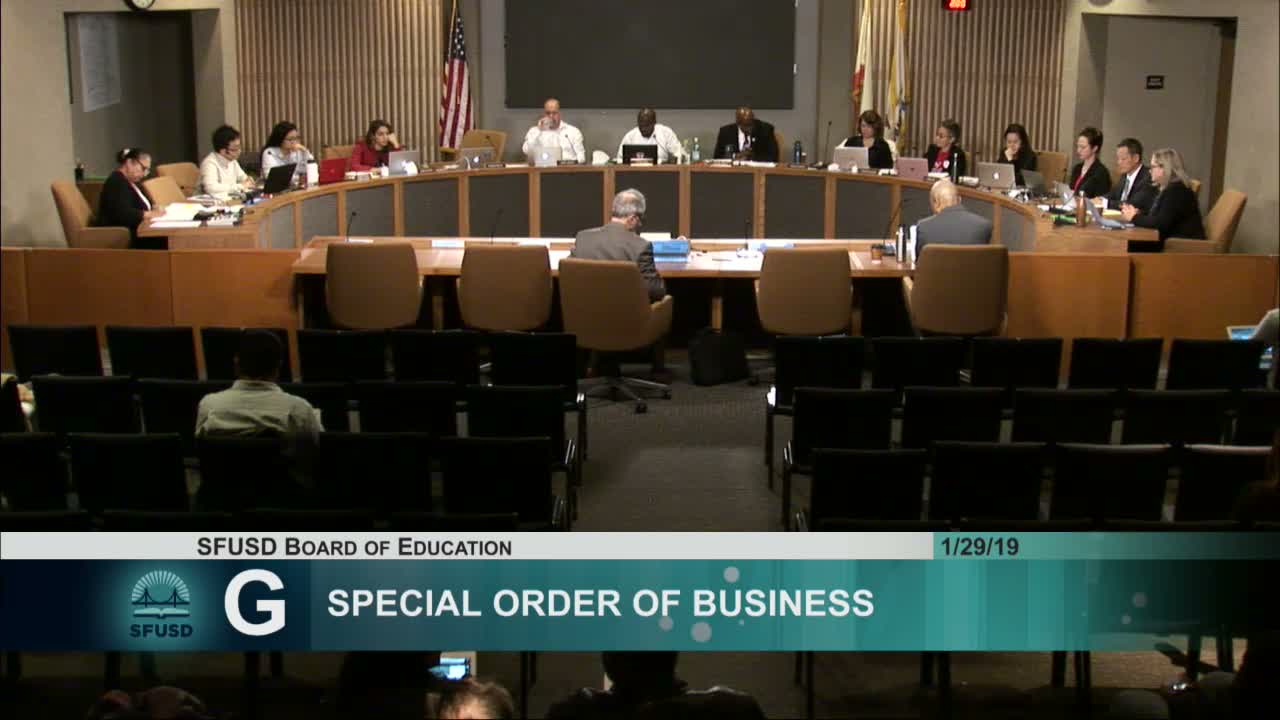
District leaders presented an update Jan. 29 on a multi‑year middle grades redesign intended to expand project‑based learning, deepen literacy supports and restructure schedules at middle schools.
Assistant Superintendent Han Fung, Chief Academic Officer Brent Stevens and colleagues said the redesign combines two strands: structural changes (block scheduling, an exploratory wheel of rotating electives and aligned early‑release time for teacher collaboration) and deeper‑learning experiences (project‑based learning, technology integration and acceleration courses). Brent Stevens told the board the redesign is grounded in equity and early pilot evidence: “60% of African American students assigned to this classroom have met their reading inventory scores, while 38% have doubled their expected rate of growth as a result of participation in the class.” Those preliminary results were presented as reason to proceed with cautious scaling.
Staff described the pilot approach: a phased rollout beginning with two schools in 2019–20, additional cohorts in subsequent years, teacher professional development (including summer training at the Buck Institute and a district project‑based learning day on Feb. 8), and efforts to staff world‑language and immersion courses using ACTFL standards.
Board members asked for additional operational detail. Commissioners asked how the block schedules (currently planned at roughly 76 to 84 minutes per block) will affect chronic absenteeism and how dual‑immersion courses will avoid creating tracked groupings. Staff said the intention is to keep most academic courses heterogeneous while offering world language through elective/acceleration periods to reduce in‑school tracking. Staff also said they will circulate more data on elective access and plans to infuse ethnic studies into curriculum design teams.
Next steps: staff will continue the pilot work, provide the board with additional data on elective access and absenteeism, and expand professional development for teachers.