Get Full Government Meeting Transcripts, Videos, & Alerts Forever!
Get email alerts on the Seismic Retrofit topic
No spam. Unsubscribe anytime.
San Francisco accelerates ‘soft‑story’ seismic study as DBI seeks voluntary retrofits and incentives
Summary
The Building Inspection Commission heard an accelerated plan to study and prioritize seismic retrofits for soft‑story wood‑frame buildings; DBI and consultant ATC will deliver recommendations by January while stakeholders urged incentives, tenant protections and streamlined permitting.
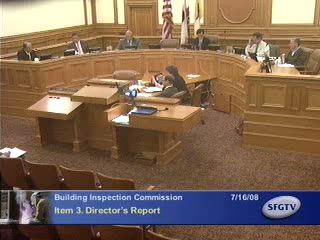
The San Francisco Building Inspection Commission on July 16 heard officials say the city will accelerate study and planning for seismic retrofits of so‑called soft‑story wood‑frame buildings, a vulnerable housing type identified as a city priority.
Tom Tobin, manager for the Applied Technology Council (ATC) CAPS program, told the commission his team will reweight the contract work to focus on soft‑story buildings, characterize DBI’s database into a small set of reference building types, model vulnerability and design retrofit options and cost estimates, and return recommendations to the mayor by January. “We will look at the database that DBI has developed on these types of buildings, characterize that database in terms of a handful of what we call reference buildings … and then we will have retrofits of those designed,” Tobin said.
DBI Director Isam Hassanen said the department is committed to providing technical staff and resources to support the accelerated work and to reduce barriers for owners who want to retrofit voluntarily. “We’re going to have a single point of contact for citizens… and some standard details that people can use,” Hassanen said, describing planned outreach, standard retrofit details and a proposed waiver of fees for retrofits.
Why it matters: Soft‑story buildings are common in San Francisco and retrofit choices can produce widespread effects on housing supply, costs and displacement. The ATC study is intended to give local officials technical and socioeconomic data to inform a policy decision about how much damage and displacement the city will accept after a major quake, and what retrofit performance it will require.
Public stakeholders urged incentives and protections. John Pax, vice chair of the Citizens Advisory Committee, praised the mayor’s support and said the reactivated CAPS effort is a positive step. Contractors, structural engineers and housing representatives repeatedly pressed the city for tangible incentives (rebates, tax deferrals or transfer‑tax set‑asides), streamlined permitting and hardship relief for related requirements like ADA upgrades or sprinkler installations that can be triggered by permitting work.
Rodrigo Santos, a structural engineer, urged planning exemptions where possible and warned that federal or code triggers (such as requirements for commercial spaces) can cascade into broader retrofits. “We need to bypass planning,” Santos said, adding that sprinkler and exiting requirements can be linked to seismic upgrades and should be considered for hardship relief where appropriate.
Commissioners pressed staff on process and standards. Some commissioners asked whether voluntary retrofits could be too minimal and requested the department study minimum acceptable standards or case studies so voluntary work achieves meaningful seismic benefit without imposing undue cost. ATC and DBI said they will collect 4–5 voluntary retrofit case studies in the coming months to help set those standards.
Next steps: ATC’s engineering analysis is due in November to allow a social‑economic workshop in December and a set of recommendations for the mayor in January. DBI said it will continue outreach citywide, provide a single point of contact for owners, pursue standard drawings and seek voluntary retrofit examples to inform policy on minimum standards and incentives.