Get Full Government Meeting Transcripts, Videos, & Alerts Forever!
Get email alerts on the Student Assignment topic
No spam. Unsubscribe anytime.
SFUSD board directs staff to design community-based student assignment system
Summary
The Board of Education voted to begin developing a new elementary student assignment system emphasizing predictability, neighborhood access, equity and integration; staff will convene a working group, propose measurable definitions and model options for the board.
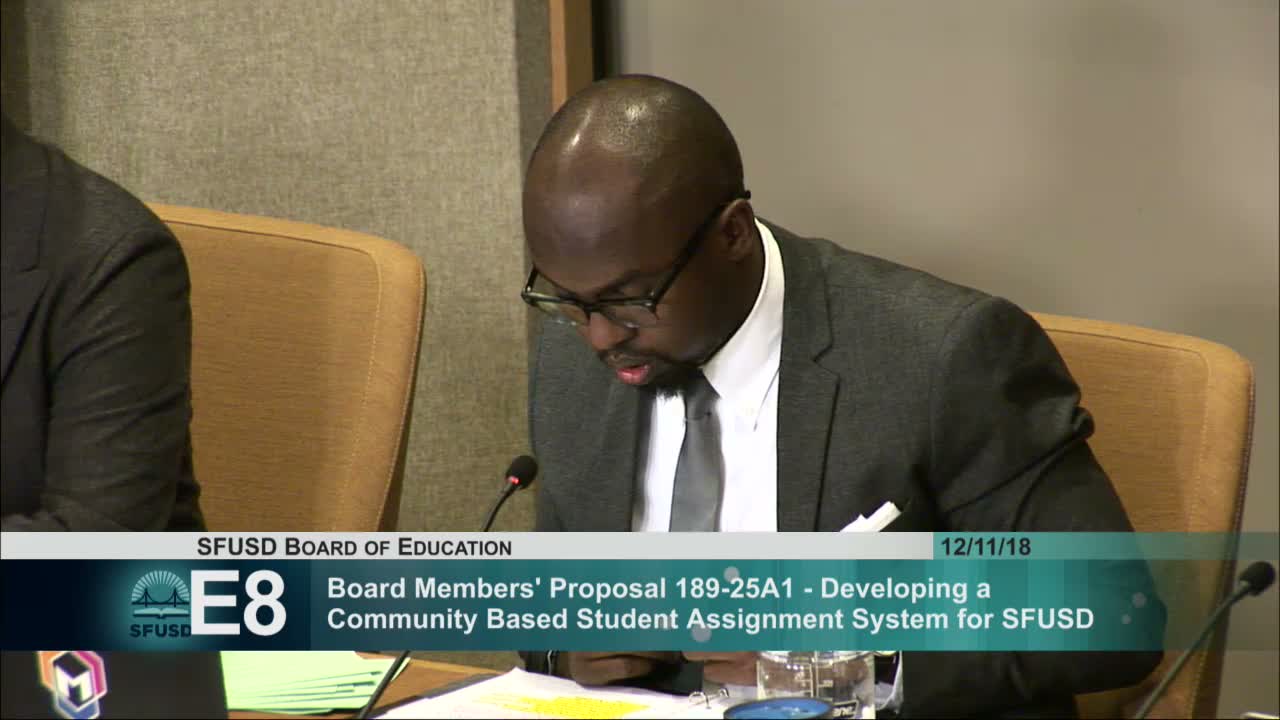
SAN FRANCISCO — The San Francisco Unified School District board voted unanimously on Dec. 11 to ask staff to design a revised elementary student‑assignment policy that prioritizes predictability, neighborhood access, equity and integrated school communities.
Commissioner Matt Haney read the substitute resolution, saying, “Families should have a right to predictability, simplicity, and transparency as they go through the student assignment system.” The motion — coauthored by Commissioners Haney, Steven Cook, Rachel Norton and Mark Sanchez — passed 6‑0.
Under the resolution, the superintendent will appoint a project manager and convene a staff working group to define measurable terms such as “quality school,” “equitable access” and “neighborhood school.” Staff must model different options (home‑based assignment with citywide choice, zone‑based guarantees, and individualized home‑address choice), analyze transportation needs and present recommendations and timelines to the board.
Supporters argued the current all‑choice lottery system worsened segregation and left families without clear, predictable options. Commissioner Sanchez said past efforts to desegregate had not succeeded because “people with means were able to walk away from the district.” Several commissioners emphasized extensive community outreach and engagement with advisory bodies as part of the policy‑making process.
Opponents among community groups and parent advocates urged caution and asked staff to center the voices of families most affected by the current system. Civil‑society representatives asked the board to ensure the outreach budget and process are adequate so historically underserved families can participate meaningfully.
The resolution requires that current students not be forced to change schools under any revised system and asks staff to report back with concrete definitions, modeling and an implementation plan. The board’s vote launches a year‑plus policy development process rather than adopting a new assignment plan immediately.