Get Full Government Meeting Transcripts, Videos, & Alerts Forever!
Get email alerts on the School Assessments topic
No spam. Unsubscribe anytime.
SFUSD assessment committee recommends more substitute days and changes to interim tests
Summary
A district assessment committee recommended higher‑fidelity use of Fountas & Pinnell and more substitute coverage, family‑friendly reporting and making the math benchmark opt‑in; committee estimated $505,908.06 for added substitute days and $178,000 for calibration release time.
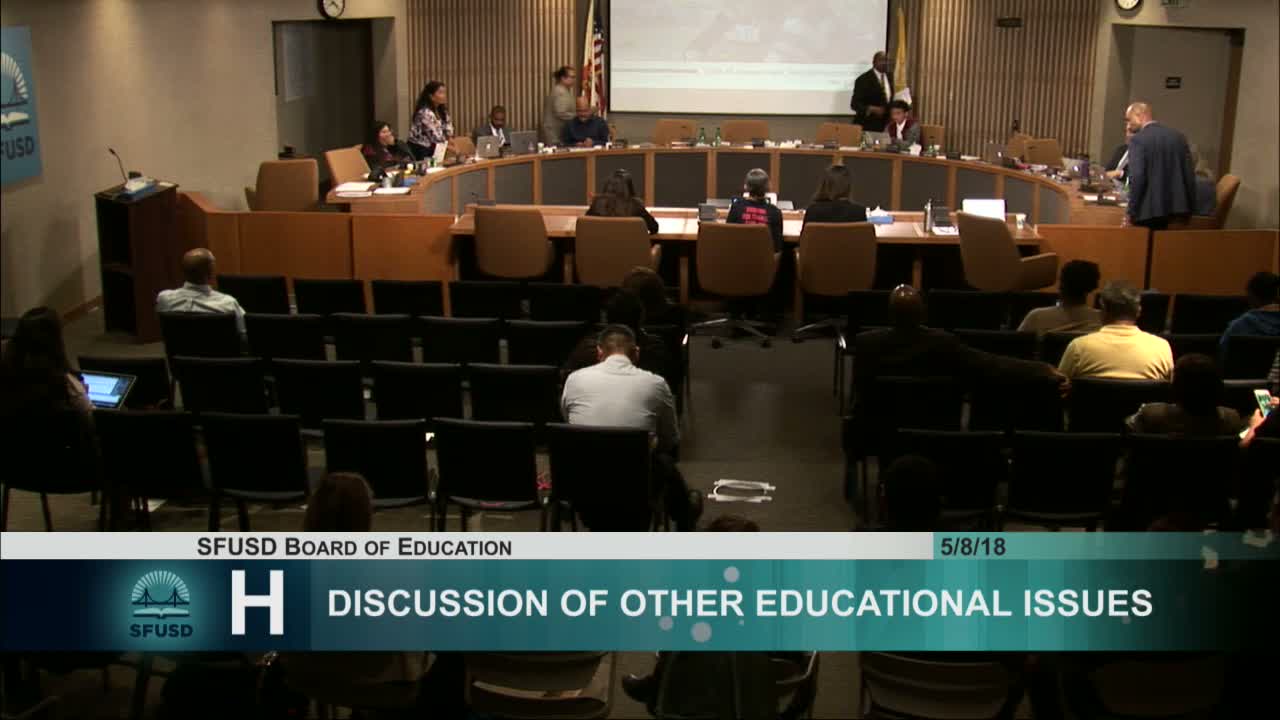
The San Francisco Unified School District’s assessment committee presented a set of recommendations May 8 aimed at making interim assessments more useful to teachers and families.
Ritu Khanna of the Research, Planning and Assessment Office said the committee—composed of district staff, union representatives, parents and teachers—focused first on the Fountas & Pinnell (F&P) reading assessment. Committee members recommended administering F&P by grade bands to reduce disruption, limiting test administration to independent and instructional levels, improving teacher calibration districtwide, and redesigning family reports to be actionable. The committee’s principal budget request was two substitute days per teacher per assessment cycle to allow one‑on‑one administration and scoring; the presentation listed an additional cost estimate of $505,908.06.
“We think that is a small investment, a necessary investment, to make this assessment worthwhile,” Lita Blanc, a teacher who served on the committee, told the board. The committee also requested an additional half‑day per teacher per cycle for calibration and data analysis (budgeted at roughly $178,000 as noted in the report).
On math assessments, Georgia Williams Bratt and other committee members said the current district math benchmark only measures fall curriculum breadth and is not always aligned to classroom scope and sequence. The committee recommended making that benchmark opt‑in for teachers and expanding required Math Milestones reporting in the fall and spring; it also proposed forming a task force to explore alternative interim math assessments.
Teachers and parent advocates who spoke during public comment supported the recommendations and urged the board to identify funding sources. Commissioner Walton and others asked staff to explore budget options (unfilled positions, carryover funds, Spark SF) and to monitor implementation if adopted. The board did not vote on funding at the May 8 meeting and directed staff to continue budget discussions ahead of the upcoming budget cycle.
Provenance: Presentation and discussion segments SEG 2719–SEG 3412.