Get Full Government Meeting Transcripts, Videos, & Alerts Forever!
Get email alerts on the Special Education topic
No spam. Unsubscribe anytime.
SFUSD special-education advisory committee highlights inclusion and reading pilots; parent speaker urges dyslexia intervention expansion
Summary
The districts Community Advisory Committee for Special Education presented data on inclusion and program breakdowns and promoted reading-intervention pilots; a parent (Katie Russell) praised a dyslexia intervention pilot and urged expansion as an equity measure.
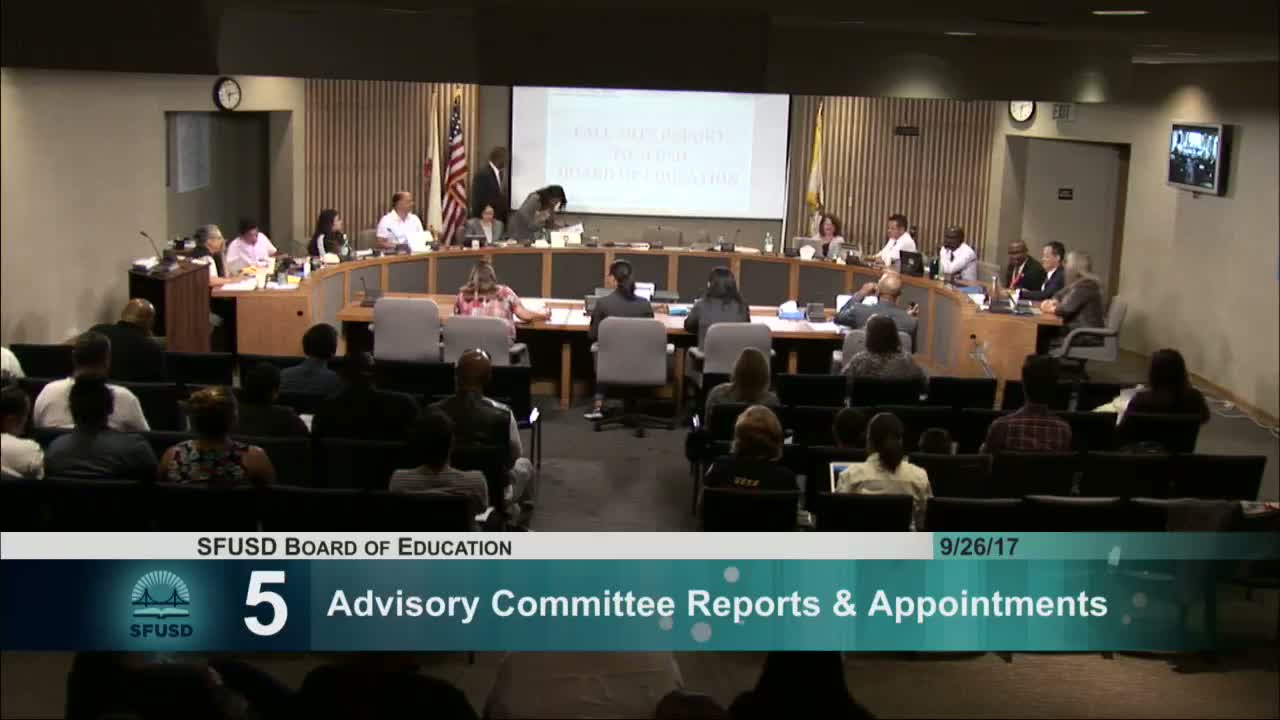
Representatives of the Community Advisory Committee (CAC) for Special Education updated the board on their role within the California SELPA structure and on district programs serving students with disabilities.
Julia Martin, CAC first chair, told the board the CAC is a state-mandated advisory body and described distribution of special-education supports: "75% of students that receive general education or receive special education services receive those in a general education setting," and that special-day classes, resource specialists and related services represent different shares of the special-education population. Martin said the CAC will prioritize parent engagement, inclusion and reading interventions this year and asked to remain part of SELPA restructuring discussions.
The CAC emphasized reading-intervention pilots as early supports that do not require an IEP to access services and noted the release of California dyslexia guidelines from the California Department of Education as an opportunity to implement systematic supports. CAC members encouraged the board to attend Inclusive Schools Week in December.
In public comment, Katie Russell spoke in favor of the districts dyslexia intervention pilot and thanked the district and Dr. Stevens for supporting the program. Russell described dyslexia as "a different neurological pathway" and said that early diagnosis and intervention are equity issues: "this expansion of early diagnosis, intervention, and proper reading instructions will lead to more equitable learning for those who have previously fallen through the cracks." She urged continued district investment in early reading supports.
Board members noted follow-up steps: Commissioner Norton said an update on AB 1369 and the dyslexia program would likely be ready for the next curriculum committee meeting on Oct. 16 and invited community members to attend. The CAC and the district agreed to share further details with the board as pilot outcomes become available.