Get Full Government Meeting Transcripts, Videos, & Alerts Forever!
Get email alerts on the School Governance topic
No spam. Unsubscribe anytime.
San Francisco school board adopts conflict-of-interest code, school-connected organization policy and firearms ban; discusses political-solicitation language
Summary
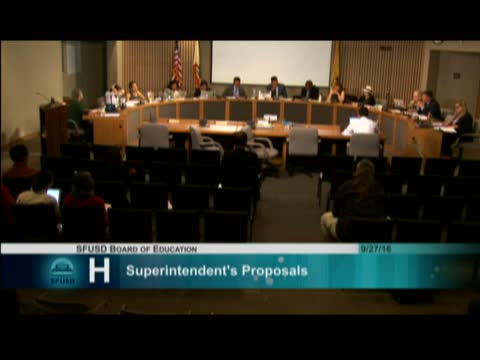
On Sept. 27 the SF Board of Education approved multiple governance items, including Board Policy 12.30 on school-connected organizations, adoption of an updated conflict-of-interest code (Form 700 reporting), Board Bylaw 9270 (campaign solicitation language tailored to district employees), and a ban on firearms on campus (with the law-enforcement exception). Several policies were adopted by roll call, votes recorded as unanimous among the seven members present.
The San Francisco Board of Education on Sept. 27 adopted several governance policies and resolutions, and debated how local campaign and solicitation rules should apply to the district and its board members.
School-connected organizations: The board approved Board Policy 12.30 after rules-committee revisions that clarified the definition of "school-connected organization," strengthened prohibitions on mandatory fundraising or donations from families, and recognized that such groups may engage in advocacy for public education. The rules committee recommended the changes and the board voted 7-0 to adopt the policy. (Rules Committee; General Counsel Daniel Hauck)
Conflict-of-interest code and Form 700: General Counsel Hauck explained the resolution to adopt an updated conflict-of-interest code required under the Political Reform Act. The code reduces reporting categories from four to two and clarifies positions that must file economic-interest statements (Form 700). Hauck noted the code "incorporates by reference" state regulations that exempt a principal residence from disclosure. Commissioners requested additional written analysis on differences between local and state reporting obligations. The board adopted the resolution by roll call 7-0. (General Counsel Daniel Hauck)
Board Bylaw 9270 and campaign/political activities: A prolonged discussion centered on whether the Board should adopt the broader San Francisco campaign and governmental conduct code language (which could be read to bar solicitation of any city and county employees) or tailor the bylaw to apply only to SFUSD employees and persons on SFUSD employment lists. Legal counsel warned the board of interpretive risks if the board adopted narrower language that later proved inconsistent with a city attorney opinion; several commissioners favored tailoring the policy narrowly to protect district employees without sweeping citywide application. The board amended the language to focus on district employees and persons on district employment lists while retaining a commitment to revisit the language if the city attorney issues guidance. (General Counsel; Commissioners Haney, Walton, Morassi, Winns)
Firearms policy (Board Policy 3515.7): Following a rules-committee recommendation and a change in state law giving districts discretion, the board determined it would not allow firearms on campus except for law enforcement; it adopted the policy by roll call 7-0. (General Counsel)
Tutoring/paraprofessional outside-work provisions: The board discussed clarifications to a long-standing policy that restricts employees from privately tutoring students at the school where they work, citing divided loyalty, liability and possible coercion concerns. General counsel said employees could provide services through community-based organizations or vendorization (for example, Golden Gate Regional Center) to remain compliant. Commissioners requested follow-up guidance and consideration of exceptional cases.
Textbooks and Williams audit: Chief Academic Officer Brent Stevens read the Williams audit requirement (Education Code section 60119) and summarized district findings: materials are sufficient in core subject areas, with some high-school science materials and laboratory equipment items (eye washes, hood ventilation) noted and in remediation. The board made the statutory written determination at the public hearing (vote recorded as 7-0).
Votes at a glance: The board recorded unanimous (7-0) roll-call approvals for major governance items brought forward at the Sept. 27 meeting, including Board Policy 12.30 (school-connected organizations), the conflict-of-interest code (Form 700), Board Bylaw 9270 as amended, Board Policy 3515.7 (firearms), and the Williams audit sufficiency determination. The board also adopted civic-education resolutions (High School Voter Education Weeks and support/gratitude for AB 2864) by unanimous votes.
What happens next: General counsel will draft clarifying language and return any revised bylaw language if the city attorney provides an opinion; staff will supply guidance on employee fundraising/solicitations and on permitted outside employment arrangements that comply with the new tutoring-policy language. Staff will also follow up on science laboratory equipment issues and report progress.