Get Full Government Meeting Transcripts, Videos, & Alerts Forever!
Get email alerts on the Labor And Staffing topic
No spam. Unsubscribe anytime.
Teachers, paras press SFUSD board to fund living wages and fully implement Safe & Supportive Schools
Summary
Dozens of educators, paraprofessionals and union leaders urged the board to prioritize affordable wages, fill paraprofessional vacancies and fund the Safe & Supportive Schools policy ahead of the June budget vote, warning of staffing losses and impacts on special education services.
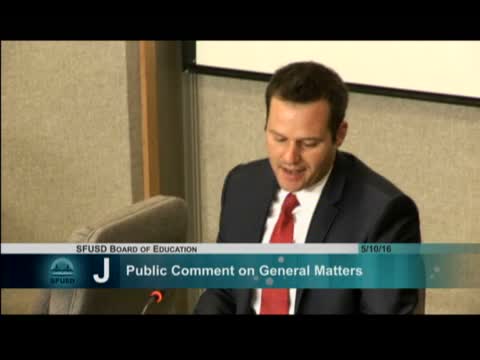
Public comment at the May 10 board meeting shifted from arts to a sustained block of testimony about teacher and paraprofessional pay, staffing shortages and the need to fully fund the district's Safe & Supportive Schools resolution.
Danny Camacho, a teacher at George Washington High School, asked the board to allow SFUSD teacherschildren to attend district schools so teachers could remain involved after school: "I implore you to let San Francisco teachers' children attend San Francisco public schools," he said, linking residency policy to after-school participation and staff stability.
Lita Blanc, president of United Educators of San Francisco (UESF), told commissioners the district is at a turning point: "Either you collectively find the funds to pay our educators a living wage, or quality public education in San Francisco risks becoming a hollow promise," she said, urging the June budget to prioritize wages, training and site staffing needed to implement the Safe & Supportive Schools policy.
Numerous paraprofessionals and special education teachers testified to severe staffing disruptions: Toby Kane, a third-generation paraprofessional, said paras earn roughly $25,000 a year and face impossible choices about living in the city; Maggie Michaels, a special education department head at Lowell, said paraprofessional vacancies took six months to fill at her site, undermining IEP compliance and safety.
Speakers tied these staffing and wage concerns to the board's upcoming budget decisions and a pending bond. Several asked the board to consider whether bond or district funds could be used to stabilize staffing and provide affordable housing options for employees. UESF leaders also flagged incomplete implementation of the Safe & Supportive Schools resolution and urged immediate funding for training, coaching and staff to support students dealing with trauma.
Board members thanked speakers and acknowledged the central budget struggle: Commissioner Norton summarized a budget committee estimate the fiscal effects of some proposals could reach several hundred thousand dollars if all components were enacted, and urged the budget committee process as the venue to weigh trade-offs.
No formal board action occurred on wages at this meeting; speakers asked the board to reflect their testimony in the June budget votes and to prioritize paraprofessional pay, recruitment and school-site supports that staff and union leaders said students need.