Get Full Government Meeting Transcripts, Videos, & Alerts Forever!
Get email alerts on the Special Education topic
No spam. Unsubscribe anytime.
Parents’ CAC urges more special‑education translators and faster assistive‑technology delivery
Summary
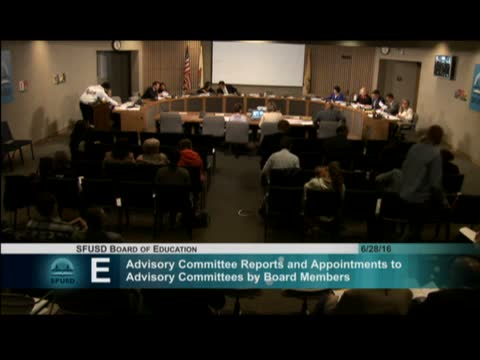
At the June 28 SFUSD board meeting, the Community Advisory Committee to Special Education warned of long delays in IEP translations and assistive‑technology (AT/AAC) delivery and urged staffing and planning changes; district staff described recent hires and a template program but said demand remains high.
The Community Advisory Committee to Special Education told the San Francisco Unified School District Board of Education on June 28 that families are experiencing long waits for translated IEPs and assistive‑technology supports, and urged the district to invest more staffing and training to close the gap.
Alita Fisher and Kimberly Webb, speaking for the CAC, said the committee has welcomed deeper district engagement over the past year but still hears reports of "gross delays" — parents and staff reported waits of up to two years for AAC and AT devices and related software. Fisher said parents want guaranteed weekly planning time between general‑education and special‑education teachers and suggested incentive pay to support planning. The CAC also recommended expanding training in multisensory reading methodologies and urged the district to increase staff to one AAC and one AT specialist per 1,000 students with IEPs, noting that the district currently lists only three total specialists.
Deputy and central office staff acknowledged the need and outlined steps already taken. Chief Truitt and other staff said the district hired four additional translators last year and has used contracting to meet surges in demand; they reported a sharp increase in translated pages produced by the in‑house Translation and Interpretation Unit over recent months. Staff said templates for base IEP documents (used to reduce repetitive translation work) are in use and that moving translation work in‑house improved continuity and subject‑matter familiarity.
Board members pressed for follow‑up data and broader fixes. Commissioner Feuer asked whether templates and internal staff will sufficiently reduce repeated translation workload; staff said templates are part of compliance efforts and that they are monitoring demand monthly. Other commissioners requested a report on how many pages or IEPs have been translated after template adoption, whether per‑IEP translation pages have declined, and whether the Civil Service classification for technical translators needs revision to speed hiring. Staff acknowledged hiring delays tied to city civil‑service processes and said short‑term contracting continues to be used when requests spike.
The CAC framed its recommendations as practical and immediate: increase trained translation vendors and in‑house staff, allocate more professional development dollars to AT/AAC specialists, and prioritize common planning time so special‑education gains are reflected in classroom practice. District staff said the budget includes some targeted increases for translation and professional development and that they will continue monitoring metrics and returning to the board with data and implementation steps.
The board did not take a formal vote on policy changes at the June 28 meeting but directed staff to continue reporting on translation staffing levels, template effectiveness and the district's plan for reducing delays. The superintendent and deputy superintendents committed to follow‑up reporting in upcoming budget and program cycles.