Get Full Government Meeting Transcripts, Videos, & Alerts Forever!
Get email alerts on the Students With Incarcerated Parents topic
No spam. Unsubscribe anytime.
SFUSD board adopts resolution to expand training and supports for students with incarcerated parents
Summary
After hours of testimony from young people and community advocates, the San Francisco Unified School District board unanimously approved a resolution directing district staff to expand training, curriculum, and school supports for students who have incarcerated parents.
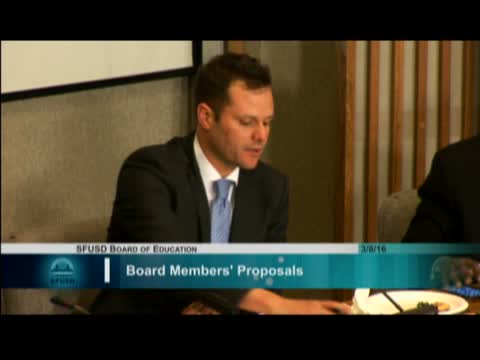
San Francisco — The Board of Education on March 8 unanimously adopted a resolution requesting the superintendent and district staff to develop annual trainings, consolidated curriculum, and deeper school‑based supports for students who have incarcerated parents.
The measure, coauthored by Commissioners Walton and Haney, asks the district to provide annual trainings for counselors, social workers, nurses, wellness staff and school resource officers; to consolidate curriculum relating to children of incarcerated parents and make it available in school libraries and classrooms; to identify a staff liaison for coordination with the San Francisco County Jail’s family‑education programs; and to add questions about parental incarceration to a youth behavior risk survey, with the district promising confidential and anonymous use of any survey data.
Why it matters: Board members said the resolution responds to a growing local need—speakers from Project What, youth commissioners, and community groups described the experience of children who lose parental stability when a parent is jailed and urged the board to address stigma, counseling access and communication barriers that affect attendance and graduation.
Voices from the meeting: Youth who testified delivered personal accounts. Cecilia Galliano, a 20‑year‑old Project What member, said she joined the organization because “my stepfather was incarcerated when I was 14 years old… I just really wish I could have had that same exact support when my parents’ incarceration was actually happening.” Multiple young speakers urged training for teachers and school staff to reduce stigma and provide direct supports.
Board response and next steps: President Haney and other board members praised the students’ testimony and asked staff to include all board members as coauthors. Commissioner Walton emphasized the resolution’s focus on intentional, school‑level supports. The board voted in favor on roll call (7 ayes). The superintendent and staff will work with community partners and return with implementation details and timelines, including which sites will receive prioritized supports and a liaison assignment.
Public record: The item was introduced and read into the record during the meeting and followed an extended public‑comment period that included youth leaders, parents, Project What staff, and representatives of the Human Rights Commission and other community groups. The board directed staff to follow up with specifics on training schedules and program pilots.