Get Full Government Meeting Transcripts, Videos, & Alerts Forever!
Get email alerts on the Education Equity topic
No spam. Unsubscribe anytime.
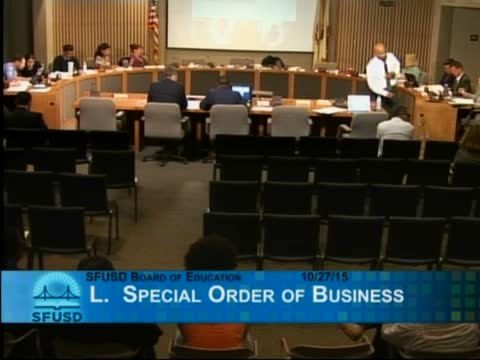
San Francisco school board hears APAC report and districtplan to close African American achievement gap
Summary
The African American Parent Advisory Council told the school board enrollment and achievement declines among Black students remain urgent; the district outlined a data-driven initiative (OLLI) to increase supports, expand CBO partnerships and track outcomes across grades.
The San Francisco Unified School District on Tuesday heard a detailed presentation from the African American Parent Advisory Council and a district plan aimed at narrowing persistent achievement and discipline gaps for Black students.
At the meeting, APAC leaders said African American enrollment in the district has dropped from about 5,700 to roughly 4,500 over three years, and described higher suspension and chronic absenteeism rates for Black students. APAC speakers urged the board to treat the issue as a citywide priority and to use regular data reporting and accountability to guide changes.
"Black minds matter," APAC presenter Kissy Carpenter said, summing up the council genda. Marlena Jackson and Carl Barnes described the council s an organizing body intended to amplify parent voice and to develop actionable recommendations for schools and district leaders.
Superintendent Richard Carranza and the district lso presented the African American Achievement and Leadership Initiative (known as OLLI), led by Special Assistant Landon Dickey. Dickey said OLLI rests on four pillars: foster a growth mindset among educators and students; engage and empower African American families; provide wraparound supports that guarantee readiness to learn; and ensure culturally responsive, rigorous instruction.
Dickey described a pilot for the class of 2015 that combined college coaching (Beyond 12), career supports (LinkedIn) and community-based organization case management. He said the district identified roughly 220 African American seniors but found only about 104 students connected with community organizations, and that only about 113 had submitted transcripts to two- or four-year colleges by May.
"We need to be more deliberate and earlier in our outreach," Dickey said, noting the district will use a new scorecard and an internal oversight committee to track progress and recommend actions.
Board members pressed for specifics on how the initiative will move from targeted cohorts to districtwide systems. Vice President Hydra Haney urged the district to tie OLLI work to measurable changes in budget, staffing and school-level practice; Commissioner Janet Feuer asked for clear, early indicators of success and cautioned against relying on interventions that come too late in a student—areer.
The board asked the rules committee and the internal oversight body to provide regular updates and recommended the district publish an interim African American student report in winter 2016, followed by a fuller year-end report after SBAC results became available.
Next steps announced by the district included launching an African American Community Council (to advise the annual report), strengthening APAC—onnections to school-site APACs and expanding the Beyond 12/LinkedIn model with funder support including a $400,000 Hellman Collaborative for Change grant earmarked to support the cohort over two years.