Get Full Government Meeting Transcripts, Videos, & Alerts Forever!
Get email alerts on the Curriculum topic
No spam. Unsubscribe anytime.
Board adopts new AP U.S. History textbook after committee review
Summary
After a blind committee review, the board approved recommended instructional materials for AP U.S. History (committee cited inclusion of Chinese Exclusion Act and broader modern history coverage); the text includes six‑year online access and a digital iLab. The board discussed portability and equity of materials across sites.
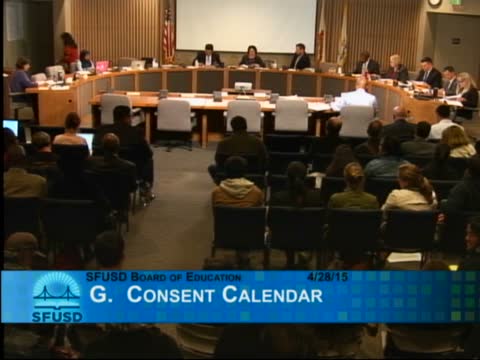
The San Francisco Unified School District board approved the adoption of new instructional materials for Advanced Placement U.S. History after a committee review and teacher presentations.
Anna Luna, a teacher on special assignment who participated in the adoption committee, told the board the committee used blind review criteria focused on content, historical thinking and organization. "We are here to recommend adoption of instructional materials for AP US History," she said. Committee members said the chosen textbook addressed previously missing topics and included diverse perspectives; the author had provided a letter to the district outlining those efforts.
Teachers and a committee facilitator described a blind evaluation process and noted an included online component — an iLab — that provides primary sources, videos and test practice for six years of access. One committee member, David Knight, told the board the committee’s selection process emphasized alignment to the new AP framework and usability for students.
Board members asked about textbook cost and portability. The committee reported a student edition price of about $137 and staff indicated the district’s broader Vision 2025 initiative is pushing for more digital content to reduce physical burdens and enable updates. Commissioner Wynne asked whether distribution plans would prevent students from carrying heavy books; staff said the district is pursuing digital access as part of its long‑term plan.
After questions and discussion, the board voted by roll call to adopt the recommended instructional materials; the recorded outcome was yes — seven ayes.
Staff were directed to implement adoption steps and continue work aligned to the district’s digital content strategy.