Get Full Government Meeting Transcripts, Videos, & Alerts Forever!
Get email alerts on the Language Pathways topic
No spam. Unsubscribe anytime.
San Francisco board launches program placement process for Arabic and Vietnamese K–12 pathways
Summary
The San Francisco Board of Education voted to begin a program-placement process to develop K–12 Arabic and Vietnamese world language pathways, directing district staff to study design, staffing, facilities and community partnerships and emphasizing instruction by native speakers and cultural integration.
The San Francisco Board of Education on May 26 voted to begin the district’s program-placement process for K–12 Arabic and Vietnamese world language pathways, directing staff to study program design, staffing, fiscal impact and site selection.
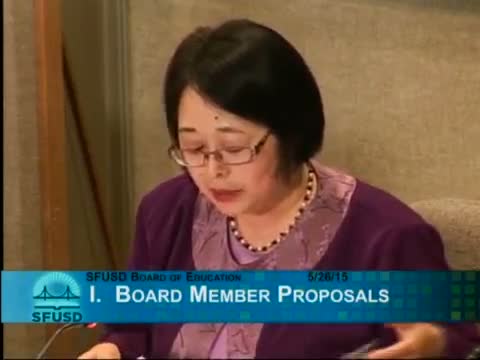
The resolution, read into the record by Commissioner Sandra Fewer, notes growing Arabic and Vietnamese speaking populations in the district and asks staff to explore native‑speaker instructors, neighborhood placement near concentrated communities, A–G course alignment, and partnerships with community groups including the Arab Resource and Organizing Center and the Vietnamese Youth Development Center. It sets the planning target of offering pathways for the 2017–18 school year if feasible.
Community speakers filled the public comment period in support. "I am very excited to stand before you to request a yes vote for the Arabic and Vietnamese world language pathways program," a parent and community advocate told the board, urging approval to help students maintain heritage languages and strengthen family ties.
Board members praised the proposal as a step toward equity and cultural representation in the curriculum. Vice President Matt Haney said the pathways could be “critical” for the Vietnamese and Arabic communities and urged a collaborative, expedited process.
The resolution requires staff to consider program design, staffing needs, facility implications, fiscal impact, a timeline for implementation and culturally appropriate professional development. It also directs the district to avoid program designs that encourage segregation and to consider integrating Arab and Vietnamese content into ethnic studies and concurrent-credit opportunities with local higher‑education institutions.
The motion passed by roll call. The board set a public process and asked for community engagement as staff return recommendations on feasibility and next steps.