Get Full Government Meeting Transcripts, Videos, & Alerts Forever!
Get email alerts on the Labor Relations topic
No spam. Unsubscribe anytime.
Community groups and union urge SFUSD board to settle contract talks as staffing gaps cited
Summary
Teachers, paraprofessionals and community groups urged the San Francisco Unified School District board to resolve contract negotiations, citing an impasse declared in June, large numbers of temporary hires and housing pressures that threaten staff retention.
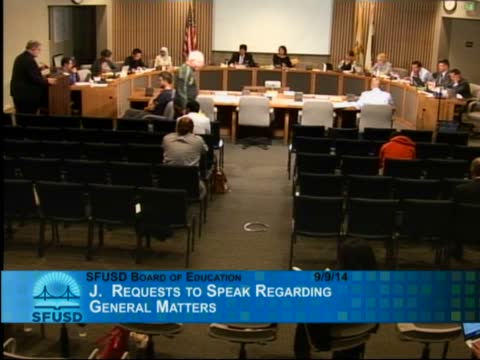
San Francisco — Multiple speakers at the San Francisco Unified School District board meeting pressed the board and district negotiators to resolve a stalled labor dispute between the district and its educators, saying continued uncertainty is harming schools.
Dennis Kelly, president of United Educators of San Francisco, said the board's June decision to declare impasse moved bargaining to a mediator and halted productive negotiations. "By going to impasse, it meant that everything was put into the hands of a mediator and it meant essentially that majority of the meetings that we would ever have with the district were stopped," Kelly said, urging district negotiators to "make responses to the things we put forward. Don't just brush them off."
Community groups and labor allies echoed that call. Amy Ellis of the Jewish Community Relations Council of San Francisco said the council "strongly encourage[d] you to do everything in your power to settle the labor dispute that, if left unresolved, could lead to the first teacher's strike in decades." Daz Lampares of the Asian Pacific American Labor Alliance said his organization would support teachers and paraprofessionals in actions if necessary.
Speakers tied staffing instability to hiring practices and housing pressures. Kelly and several public commenters cited roughly 84 hires listed on the personnel agenda filed under temporary or waiver designations for special education and bilingual positions; Kelly called that number "absolutely shocking" and said it signals the district must strengthen its human resources processes. James Tracy of Jobs for Justice warned that if the workforce is forced to live outside the city it will degrade instruction and after-school opportunities.
Front-line workers described the stakes. Josh Davidson of SEIU Local 1021, who cooks for the district's early-education program, said he "really like[s] my job" and did not want to lose work to a strike, but called for a fair contract so staff can remain in the city. Several speakers cited local eviction cases involving school employees and called on the board to craft a settlement that helps educators afford to live in San Francisco.
The board did not act on a bargaining settlement at the meeting. Instead, multiple members acknowledged the public concern and commissioners requested additional information and follow-up during committee meetings. President Feuer closed the public-comment period after a series of community and union speakers.
Next steps: speakers asked the board to press district negotiators for substantive responses and to use committee channels to monitor progress toward a negotiated contract.