Get Full Government Meeting Transcripts, Videos, & Alerts Forever!
Get email alerts on the Board Response topic
No spam. Unsubscribe anytime.
Board backs student-nutrition vision but asks for fiscal, facilities and equity analysis
Summary
Board members praised the district’s student-nutrition plan and its student-led design work, but multiple commissioners demanded access to the underlying financial model, a facilities assessment for kitchen renovations, pilot sequencing and guarantees that revenue-driving ideas (like dinner kits) will remain accessible to low-income families.
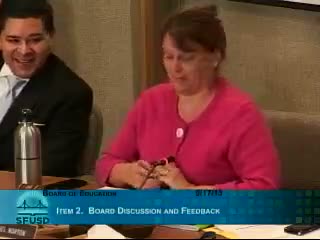
Members of the San Francisco Unified School District Board praised staff and partners for a student-centered redesign of school meals at the Sept. 17 special meeting but repeatedly asked for more rigorous fiscal and facilities work before approving large-scale implementation.
Several commissioners commended students’ role and the partnership with IDEO and the Williams Foundation. A board member asked staff to provide the underlying financial dataset and the Excel tool behind the projections so commissioners could validate assumptions about participation, labor and renovation costs. Concerned members flagged that district data systems have in the past been weak and requested that staff and interested board members review the model’s foundational numbers together.
Commissioners also prioritized a facilities assessment to test whether schools could accommodate communal eating or renovated production kitchens without prohibitive costs; one commissioner questioned if the renovation estimates were unrealistically low and urged a systems-level review of multipurpose rooms, folding furniture and gym/auditorium constraints.
Equity-focused questions centered on the dinner-kit and other revenue proposals. One commissioner warned against allowing private, for-profit companies to gain access to district families without careful policy guardrails. Staff replied that initial talks with a provider (Revolution Foods) had begun and that options include third-party production, subsidized or reimbursable kits for low-income families, or in-district production if feasible.
Board members asked staff to return with recommended next steps: prioritized pilots (which schools to pilot first), a clear facilities-cost estimate, the financial model and an equity plan to ensure low-income students are not excluded from new offerings. No formal vote occurred; staff were directed to pursue pilots and deeper analysis and to brief commissioners individually and collectively as prototypes produce data.