Get Full Government Meeting Transcripts, Videos, & Alerts Forever!
Get email alerts on the Procurement Transparency topic
No spam. Unsubscribe anytime.
Commissioner presses district on retroactive contracts; staff say administrative and accounting causes
Summary
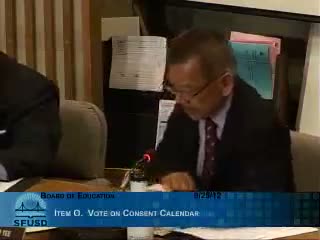
Commissioner Mendoza challenged retroactive approvals on the consent calendar (items K1 and K33), saying contracts appeared to authorize work that began in August but were brought to the board late; SIG and district staff explained leadership transitions at schools and fiscal-year accounting rules that produced the retroactive filings and pledged follow-up.
A contentious exchange on the consent calendar focused on retroactive contract approvals for after-school and SIG‑funded activities.
Commissioner Mendoza, who had pulled items K1 and K33 for discussion, said she was "frustrated" that the contracts appeared to have started Aug. 1 but were not presented to the board until Sept. 25. "These kinds of things are the kinds of things that... worry me particularly as the budget chair and for somebody who is concerned about the dollars that we spend and the commitments that we make," she said, calling retroactive K resolutions "unacceptable" when work was already underway.
SIG executive director Kevin Rocop explained that one affected school, Buena Vista/Horace Mann, experienced a leadership change and that negotiations with an after-school provider (Jamestown) had been affected by that transition; staff said Jamestown believed a short, partial contract was in place for August–September while new leadership negotiated programming, but the paperwork fell through the cracks. Rocop said that SIG funding had been approved previously for expanded learning time and that the retroactive entry was an administrative consequence of fiscal-year coding and the creation of separate contracts rather than simple amendments.
Another staff member explained there was sometimes a delay between the guarantee of grant funding and the physical loading of a budget code in the district system, and that principals had at times waited to submit K‑resolutions until accounts were active. Board members pressed for clearer explanations and asked staff to provide better drop‑down reasons on K‑resolution forms when funds are secure but not yet physically loaded.
Board members expressed concern about eight weeks of work occurring without board authorization and requested follow-up. Staff acknowledged the procedural gaps and committed to improved communication and documentation to avoid future retroactive approvals.