Get Full Government Meeting Transcripts, Videos, & Alerts Forever!
Get email alerts on the State Budget topic
No spam. Unsubscribe anytime.
Board briefed on governor's May Revision: district faces $83 million shortfall; local advocacy urged
Summary
Deputy Superintendent Myung Lee told the board that the governor's May Revision increased the projected state deficit and that SFUSD could face an $83 million gap over the coming years; commissioners urged advocacy, and staff noted key triggers tied to November tax measures and transportation funding.
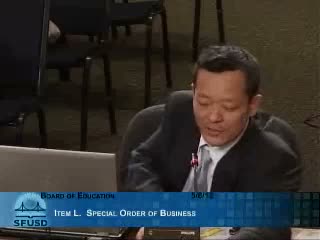
The San Francisco Unified School District received a condensed briefing of the governor's May Revision at the May 15 board meeting, in which Deputy Superintendent Myung Lee outlined a worsening statewide fiscal picture and the local implications for K-12 funding.
Myung Lee told the board the governor's May Revision estimates a statewide budget gap of roughly $15.7 billion and includes a proposed November ballot measure that would raise revenue through an income surtax on high earners and a quarter-percentage-point sales tax. Those measures are projected to generate roughly $8.5 billion if approved; their passage is central to the governor's plan and to whether districts will face further cuts.
"Even if the tax initiative passes, our projected deficit grows under the governor's proposal," Lee said, noting that the proposed budget assumes partial remedies that may not translate into direct new money for classroom programs. Lee gave district-level figures: SFUSD could see a two-year shortfall in the neighborhood of $83 million; if the tax measures fail, the midyear trigger could yield an estimated reduction of about $23 million (roughly $46 million across two years). She said that a failed tax measure could mean a per-student loss on the order of $440 in Prop 98 funding and increase the deficit factor the district must manage.
Board members voiced alarm and urged coordinated advocacy. "Now is the time to get mad," Commissioner Morasa said, urging outreach to legislators. Commissioner Wins urged colleagues to participate in local advocacy (CSBA's "Be Mad" board member action day) and to press the Legislature and governor not to treat school funding as an arithmetic exercise divorced from students' needs.
Lee underscored a limited timeline: significant legislative activity was unlikely until after the June primary, and the state faces a June 15 deadline under Prop 25 to pass a budget. She also identified a handful of policy changes under discussion at the state level (transitional kindergarten, weighted student funding) that could have major local implications and asked the board to weigh in as those proposals advance.
The board asked staff for further comparative analysis of tax measures and for reports back to committee on potential local responses, including whether to adopt a board position supporting specific ballot measures.
The presentation framed the district's budget choices for the coming year and was followed immediately by the student nutrition diagnostic presentation, with several commissioners linking the two topics when discussing priorities for limited local funds.