Get Full Government Meeting Transcripts, Videos, & Alerts Forever!
Get email alerts on the Kinder To College topic
No spam. Unsubscribe anytime.
Treasurer Cisneros unveils "Kindergarten to College" pilot: $50 seed accounts for incoming kindergartners
Summary
City Treasurer Jose Cisneros told the SFUSD board the new program will open custodial college-savings accounts for incoming kindergartners with a $50 city deposit (an additional $50 for eligible free/reduced lunch students); 1,200 accounts at 18 schools will be opened in year one, expanding to all kindergartners by year three.
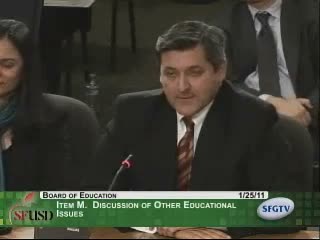
San Francisco Treasurer Jose Cisneros presented the City—s new "Kindergarten to College" initiative to the Board on Jan. 25, outlining a phased rollout that will automatically open custodial college-savings subaccounts for entering kindergartners.
Under the program, every child entering kindergarten in participating schools will receive an account opened by the City and County of San Francisco with an initial $50 deposit; children eligible for free and reduced-price lunch will receive an additional $50. The Treasurer said families may opt out but that accounts will be opened automatically unless a family requests otherwise.
"Every child entering in the kindergarten class will receive a college savings account opened with an opening deposit of $50 from the City and County of San Francisco," Treasurer Jose Cisneros said. He emphasized the accounts are one-way custodial accounts: "Money goes in and does not come out," except to be used for college or postsecondary education as authorized by the City and County.
The pilot will open approximately 1,200 accounts in 18 elementary schools in the first year, double that in year two to about 2,400 accounts, and expand in year three to all incoming kindergartners in the district. Cisneros said the City is not using SFUSD operating funds for the program; funding is from the City and private donations. The Treasurer reported $175,000 in private-match funding raised in the program—s first year and described dollar-for-dollar matches for small family savings in the initial phase.
Staff described operational details: accounts will be custodial subaccounts held in aggregate by the City (the City will be the official owner of the custodial account and will authorize withdrawals), families and friends will be able to deposit money, and the bank partner has promised no account fees for families or the City. Program staff said consent forms will be requested so the district can share limited data (eligibility for free/reduced lunch, attendance) with the Treasurer—s office to administer incentives.
Board members asked about fees, bank partners (Citibank was mentioned as a likely partner), portability if a student leaves the district, and outreach and consent rates; staff said they had trained teachers and clerical staff and reported about 54% return of parent consent forms for the pilot cohort, with at least one school at 100%.
The Board lauded the partnership with the City, outside funders and research partners (Stanford, Gates Foundation) and welcomed the program—s financial education component, which will be integrated into participating classrooms.