Get Full Government Meeting Transcripts, Videos, & Alerts Forever!
Get email alerts on the Public Media topic
No spam. Unsubscribe anytime.
Board approves short-term line of credit for KALW, adding accrued interest to amendment
Summary
After hearing a State of the Station report, the board approved a short-term line of credit for KALW to bridge cash-flow shortfalls, amending the resolution to specify that interest will accrue; trustees and staff described the loan as collateralized by the district-held license and intended as a bridge to a strengthened development program.
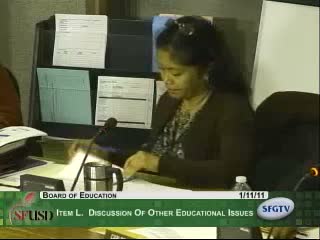
The San Francisco Board of Education approved a short-term line of credit for KALW, the district-licensed public radio station, after a presentation from station General Manager Matt Martin and follow-up discussion of finances and governance.
Martin described KALW—s programming and recent growth in local journalism and partnerships, and asked the board for a bridge loan of up to $200,000 to cover operational cash-flow while the station strengthens its development capacity. "We are in the process of a change in our development leadership," Martin said, arguing the station can recover through targeted fundraising and donor cultivation.
District finance staff and the CFO outlined terms: the line of credit would come from the district general fund as a loan, not a direct operating subsidy; KALW would repay principal and interest, and the district would treat the station—s assets and license as collateral. Board members asked about operating budgets, student involvement in programming, and whether interest would be charged. The board voted to amend the consent-item motion to specify that interest will accrue on the loan; the amendment was adopted by roll call and the loan was approved with that amendment.
Supporters characterized the loan as a low-risk bridge intended to avoid sudden service interruption while KALW increases its fundraising and develops an advisory structure. Opponents raised concerns about precedent and the district—s limited fundraising capacity; board members said the loan is structured as a repayable line of credit and not a grant.