Get Full Government Meeting Transcripts, Videos, & Alerts Forever!
Get email alerts on the Transportation Policy topic
No spam. Unsubscribe anytime.
Board committee weighs major overhaul of SFUSD elementary bus service, proposes shrinking fleet from 44 to 25
Summary
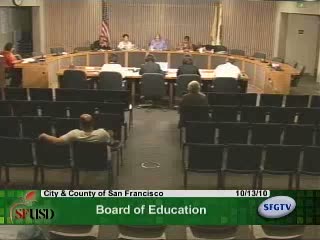
Staff told a Board of Education ad hoc committee that aligning transportation with the new student assignment policy would be a major shift: recommended changes include adding an after‑school access goal, reducing the yellow‑bus fleet from 44 to 25 over three years, and phasing route changes so families have advance notice.
Staff told the San Francisco Board of Education ad hoc committee on student assignment that the district’s current elementary transportation system is a legacy network not aligned with new assignment goals and recommended a phased realignment that would reduce the general‑education yellow‑bus fleet from 44 buses to 25.
"The main reason is that we believe that our transportation policy should reflect our strategic plan commitments," said Susan Kagajero, a staff presenter, explaining that the district currently operates about 44 buses making roughly five to six trips per day and serving about 3,300 elementary students. She said a sample baseline intended to support the assignment policy’s equity goals would concentrate service in CTIP‑1 neighborhoods and to schools offering immersion and newcomer programs.
Staff presented three recommended adjustments: add an explicit goal to support SFUSD after‑school access where on‑site programs are not available; reduce the general‑education elementary fleet to 25 buses; and phase out routes over three years beginning with the 2011–12 school year and reaching full implementation by 2013–14. "The first major implication was that this would be a major shift in services," Kagajero told the committee.
Staff estimated the change could mean a significant reallocation of service: under the crude sample baseline about 900 current riders might retain service while roughly 2,400 could lose it, even as some new riders would gain service through strategically placed routes. Commissioners and staff discussed operational and equity consequences, such as whether routes that now pass through multiple neighborhoods (for example to Lakeshore) would be shortened or retained to preserve diversity.
Commissioners pressed for details on cost and operational tradeoffs. Mr. Lee, a staff fiscal contact, said the contractor cost for a bus in the district’s arrangement with First Student is about $90,000 to $100,000 per bus (clarified as a per‑bus contract rate). Staff also noted dedicated state funding of roughly $2,200,000 for general‑education transportation and that Title I rules currently reserve at least 5% of Title I funds for transportation to students in Program Improvement schools (staff estimated that reservation at about $500,000), figures commissioners said could inform a baseline fleet size.
Board members raised other impacts: fewer buses could reduce available field‑trip capacity and complicate after‑school transportation to non‑SFUSD programs. Some commissioners urged development of an on‑site after‑school capacity plan before removing off‑site routes, and others suggested exploring sliding‑scale parent fees or alternative funding, while noting legal limits on how much the district may charge for transportation.
Staff outlined the near‑term schedule: more specific infrastructure proposals would return to the ad hoc committee on November 8, and staff intends to bring an amended student‑assignment policy back for second reading and Board action on December 14; the route‑level stops would be developed and published later (staff said neighborhood‑level route guidance could be available by July to inform parent choices). Staff committed to posting legible maps and providing larger or electronic copies to the Board and the public.
The committee did not take formal votes on route changes at the meeting. Several commissioners requested additional analysis (including who would be affected, after‑school capacity, field‑trip impacts and alternative funding mechanisms) before any final decision.
The ad hoc committee will revisit transportation and monitoring/evaluation at its November 8 meeting.