Get Full Government Meeting Transcripts, Videos, & Alerts Forever!
Get email alerts on the Superintendent Zones topic
No spam. Unsubscribe anytime.
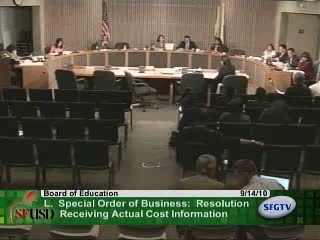
SFUSD launches targeted ‘superintendent zones’ to accelerate Bayview and Mission schools
Summary
Deputy Superintendent Richard Carranza and assistant superintendents outlined a new ‘superintendent zones’ strategy focused on the Bayview and Mission to align resources, expand instruction supports and pursue $45 million in SIG funding aimed at closing achievement gaps.
Deputy Superintendent Richard Carranza told the school board the district is launching targeted "superintendent zones" to concentrate central-office resources, personnel and supports on a limited set of schools in the Bayview and Mission that need accelerated improvement.
"When we dedicate and align our resources, personnel, time, money, existing infrastructures to support an identified set of schools ... we will positively impact and accelerate student learning outcomes," Carranza said as he described the district’s draft theory of action and the initial priorities identified with help from an RPA analysis of need.
Assistant Superintendent Patricia Gray and Assistant Superintendent Guadalupe Guerrero described how the zones will operate day-to-day: expanded benchmark assessments and formative tools, dedicated English-language development (ELD) time in master schedules, instructional coaches and "academic acceleration specialists" who support targeted students, and increased professional development aimed at building internal capacity.
"At the center of our effort to dramatically accelerate student outcomes is the Instructional Core," Guerrero said, outlining plans for a second teacher in some literacy blocks, coaches working with grade-level teams, and a sequence of teacher professional development tied to school data.
The presenters said the district will pursue a community-school model: nine schools will identify full-time community-school coordinators, the district will launch a Community Advisory Council steered by a community steering committee, and staff will engage neighborhood community-based organizations (CBOs) and the mayor’s truancy program to tackle noninstructional barriers.
Carranza and Guerrero told trustees the district expects $45,000,000 recommended through its school improvement grant (SIG) LEA application, which would support 10 of the 15 schools in the initial zones and supplement additional private foundation grants already secured.
Board members asked for concrete, on-the-ground examples and accountability measures. Commissioner Norton pressed for specifics about "how this will look and feel" at target schools; Guerrero and Gray said parents should see more adults in classrooms, clearer grade-to-grade expectations and more frequent communication about student progress. Several trustees asked that restorative-justice practices and the district’s parent-engagement plan be explicitly incorporated.
Presenters committed to more frequent updates to the board, to develop measurable yearly goals (for example, targets for attendance, truancy and disciplinary measures), and to expand outreach such as door-to-door engagement in the two zones. They also said cross-pollination of successful practices across the district would be part of an eventual scale-up.
The board did not take a formal vote on the zones; presenters said they will continue to refine the plan with parents, labor partners and community stakeholders and return with implementation details and outcome measures.
The superintendent’s office will continue community engagement next month and report progress to the board on a regular schedule.