Get Full Government Meeting Transcripts, Videos, & Alerts Forever!
Get email alerts on the Attendance Policy topic
No spam. Unsubscribe anytime.
Board adopts resolution aiming to reduce elementary chronic absence to 10%
Summary
The SFUSD board unanimously adopted a resolution directing the superintendent to analyze chronic absenteeism data annually, create pilot attendance-monitoring teams, and aim to reduce elementary chronic absence to no more than 10% districtwide by the 2012-13 school year.
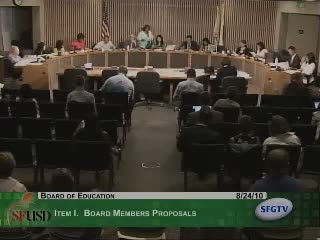
The San Francisco Board of Education on Aug. 24 adopted a resolution authored by Commissioner Yi to address early chronic absenteeism in elementary schools.
The resolution defines chronic absence as missing 10 percent or more of school days (excused or unexcused), cites research linking early absenteeism to long-term achievement problems, and directs the superintendent to provide an annual analysis of patterns by grade and student subgroup. It requires the district to create a pilot program in the superintendent zone for 2010-11 to reduce chronic absence by at least 5% in participating schools, form school-level attendance monitoring teams, and include attendance targets in school improvement plans.
Witnesses and experts supported the measure in public testimony. Hetty Chang of Attendance Counts told the board chronic absence is a proven early-warning indicator and urged routine monitoring rather than single-point analyses. Andrew Russo of the San Francisco Family Support Network said the resolution presents an opportunity for coordinated citywide action.
Board members discussed data-quality needs and asked staff to run a full-year analysis for baseline numbers. The measure passed on a roll call vote; staff were directed to report pilot selection criteria, monitoring plans and timeline to board committees.