Get Full Government Meeting Transcripts, Videos, & Alerts Forever!
Get email alerts on the Professional Development topic
No spam. Unsubscribe anytime.
SFUSD principals report progress from equity-centered professional learning communities
Summary
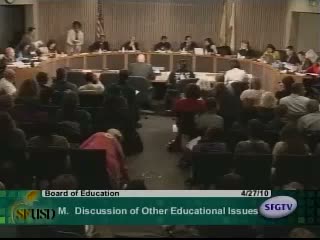
At the April 27 meeting principals and district leaders described Equity-Centered Professional Learning Communities (ECPLCs) as a district initiative to foster collaboration, instructional change and equitable student outcomes; multiple principals gave concrete examples of peer consultancies, equity walk-throughs and shared protocols.
The San Francisco Unified School District presented an update April 27 on its Equity-Centered Professional Learning Communities (ECPLCs), a district initiative to build principals’ capacity and spread equitable instructional practices across sites.
Associate Superintendent Kevin Truett described ECPLCs as a system of principal and administrator networks that focus on equity, shared norms and measurable student outcomes. He said the program aims to move beyond one-day professional development to sustained, collaborative work that changes daily practice.
Principals from elementary, K–8, middle and high schools gave brief reports on how ECPLC participation changed their practice. Susie Shimizu said the child development group used leadership actions and returned learning to sites; Lance Tagamori (Paul Revere School) said K–8 principals built connectedness and learned to hold courageous conversations; Grama Machado (Daniel Webster Elementary) emphasized protocols for classroom observation and deep inquiry; Bill Capenhagen (Burton High) described a 'consultancy' process that helped identify and act on difficult problems; Thomas Graven (Hoover Middle) highlighted equity walkthroughs and response-to-intervention pilots.
Speakers said the work produced observable changes in teacher practice and provided principals with peer feedback that would be difficult to replicate through one-off workshops. Board members thanked presenters and asked staff to continue reporting measurable outcomes.
Next steps: staff said principals will continue monthly ECPLC meetings, collect evidence on teacher practice changes, and integrate equity walk-through measures into the balanced scorecard.