Get Full Government Meeting Transcripts, Videos, & Alerts Forever!
Get email alerts on the Summer School topic
No spam. Unsubscribe anytime.
SFUSD proposes steep summer‑school reductions, prioritizes seniors and special‑education extended‑school‑year services
Summary
To help close the $113M shortfall, staff proposed cutting most general summer‑school programming and retaining limited sessions for graduating seniors needing credit recovery and legally required special‑education extended‑school‑year services; staff estimated the district's summer‑program expenses at roughly $343,485 under the reduced scope.
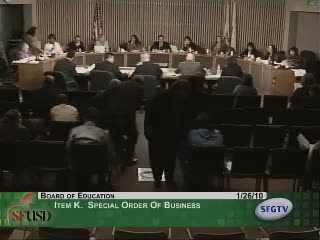
District staff presented a proposal to substantially reduce the scope of summer school in 2010 as a near‑term budget response. The staff recommendation would limit district‑operated summer classes to: (1) a credit‑recovery program for graduating seniors (estimated ~350 students who need few credits to graduate), and (2) required special‑education extended‑school‑year services; other enrichment offerings would be cut or moved to grant‑funded community providers.
Program staff explained the rationale: planning timelines require decisions now to notify families and set up sites; state reimbursements and grant funds (e.g., GEAR UP, after‑school Excel programs, partner camps) will cover some opportunities, but the district cannot under its proposal support the broad array of seats offered in prior summers. Staff said summer school historically served thousands of students (district figures cited about 298 elementary, 1,280 middle and 3,976 high‑school enrollments in a prior summer) and that the proposed change would sharply reduce the district‑operated population.
Board members asked for impact and outcome data (which staff said they were assembling), reimbursement figures (staff estimated roughly $1.9M in state reimbursement ranges but cautioned about variability), demographic breakdowns and evidence of summer‑school effectiveness. Staff said the district will expand in‑school credit‑recovery options (Cyber High and co‑enrollment at City College) and explore a portfolio of credit‑earning alternatives to limit negative long‑term effects on students.
The board voted on the proposed reduction in scope and, after roll call, approved the reduction (five ayes), with several commissioners saying they needed more demographic and effectiveness data for future decisions.
Next steps: staff will provide historical demographics and outcome metrics for summer programs and finalize the details of graduating‑senior recovery sites and partner program contracts.