Get Full Government Meeting Transcripts, Videos, & Alerts Forever!
Get email alerts on the Board Deliberation topic
No spam. Unsubscribe anytime.
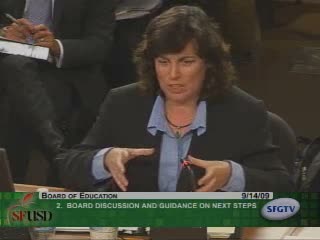
Board splits over zones vs. controlled choice; transportation and program placement emerge as central concerns
Summary
Board members praised staff work but diverged on preferred models: some favored controlled choice with attendance-area safeguards while others favored larger zones; multiple commissioners pressed staff for transportation cost analysis, program-placement scenarios and clearer evaluation metrics before community conversations.
District staff’s presentation prompted extended board discussion over whether to emphasize proximity, controlled choice, or larger zone models — and how to pay for the transportation and program changes each might require.
Several commissioners said they favored option 2 (a controlled-choice system that guarantees attendance-area assignment if a student does not secure a choice seat) because it offers greater predictability for families while preserving some choice. Other board members said larger zones (option 3) offered the best potential to increase diversity but warned that zones present practical transport and program-relocation challenges. Commissioners repeatedly asked staff to overlay current bus routes on proposed boundary maps and to provide transportation cost projections; one commissioner cited roughly $15 million in special-education transportation spending as an urgent budget question.
Board members also pressed staff on program placement — how immersion, newcomer, and selective programs would be allocated under each model — and on protections staff proposed to include under any option (grandfathering current students, sibling priority, and maintenance of required special-education and English-learner services). Several commissioners requested maps showing racial/ethnic diversity by school enrollment (not just by residence) and asked staff to test smaller-area mechanisms (for instance, census-tract–level prioritization) to avoid overly broad geographic priorities.
Members and public commenters urged a robust public-engagement plan, targeted outreach to African American parents, and clear evaluation parameters that tie system design to the board’s stated priorities: reversing racial isolation and reducing concentration of underserved students. Staff agreed to return with refined models, cost estimates and community-engagement materials ahead of an October meeting so community conversations can begin on schedule.
The committee made no formal decision and set the next ad hoc meeting for Oct. 19 to continue analysis and to plan community forums.