Get Full Government Meeting Transcripts, Videos, & Alerts Forever!
Get email alerts on the School Closure topic
No spam. Unsubscribe anytime.
Parents, teachers and students urge board to keep William Cobb’s general education program
Summary
Dozens of William Cobb parents, teachers and students told the San Francisco Board of Education they were blindsided by plans to phase out Cobb’s general education program and urged the board to preserve the school’s programs and supports for students with learning differences.
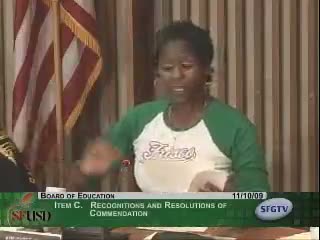
Dozens of parents, teachers and students pleaded with the San Francisco Board of Education on Nov. 2 to stop plans to phase out the general education program at Doctor William L. Cobb School.
Students described personal attachment to the school and said the district had promised stability; teachers and parents recounted earlier assurances that the general-education track would be preserved and described being informed late about a proposed phase-out that would begin in the 2010 school year. "How are you depriving me of this opportunity?" said fourth‑grader Cameron Collier, asking the board why the school’s graduates might be denied the chance to finish at Cobb.
Several teachers and parents said the special-day‑class and related supports — including a Slingerland multisensory reading program described by one parent as critical for her daughter’s progress — would be difficult to replicate elsewhere. Candace Chin, who has taught at Cobb for 17 years, told the board stakeholders had been asked to follow the district’s recommendations and had done so in good faith, only to learn later that the general‑education program still faced elimination.
Community members raised concerns about equity and neighborhood displacement, with speakers noting that Cobb has served Black families and low‑income households for decades and that nearby empty school buildings might accommodate the monastery or other consolidations without displacing Cobb students and staff.
Board President and Superintendent acknowledged receipt of written comments and said board staff would accept additional written submissions. The public comment sequence was organized by the chair, who gave the William Cobb community a 15‑minute block in which speakers consolidated remarks to fit the time allotment.
What’s next: Board members did not immediately vote on Cobb program changes during the meeting; several commissioners requested more information about the community’s concerns and the district’s prior communications and timeline before any decision is finalized.