Get Full Government Meeting Transcripts, Videos, & Alerts Forever!
Get email alerts on the Class Size topic
No spam. Unsubscribe anytime.
Teachers and parents protest class-size increases and proposed changes at Dr. William Cobb Elementary
Summary
Dozens of teachers, parents and community members urged the board to reverse recent class-size increases and to halt plans to eliminate or supplant the general-education program at Dr. William Cobb Elementary; speakers warned of equity harms to African American students and asked for more transparency and community engagement.
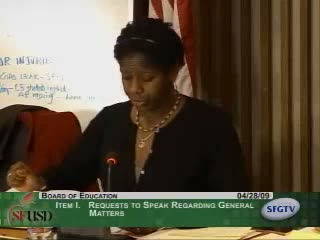
A sustained public comment period at the April 28 San Francisco Board of Education meeting focused on teacher and parent opposition to the board—s recent decision to raise class sizes and on local efforts to reconfigure programs at Dr. William Cobb Elementary.
United Educators of San Francisco President Dennis Kelly and several teachers said the decision to increase class sizes was announced publicly before the board—s vote and risked reversing gains made under small-class initiatives. Speakers cited research and the district—s QEIA-funded programs, arguing that maintaining small classes, especially in K-3, is critical to closing achievement gaps.
Teachers and staff from Dr. William Cobb Elementary (Victoria Bautista, Candace Chin, Ranelle Garibaldi and others) said they had learned of an administrative decision to replace the school—s general-education program with a Montessori program in the CDC and that families and teachers had not been consulted. They warned the planned change would displace students, disrupt a program that had shown academic progress for African American students, and damage community trust.
Board members acknowledged the depth of public concern and said the personnel/ad hoc committee would discuss the Cobb matter at a subsequent meeting as an informational item. Commissioners urged staff to provide additional details and to meet with affected families. Several speakers requested written justifications, data on placement decisions and assurances that program changes would not proceed without fuller community engagement.
The public comment included multiple personal accounts from students, parents and educators describing classroom dynamics, special-day-class placements, and the potential impact on vulnerable students if class sizes rise and general-education seats are removed.