Get Full Government Meeting Transcripts, Videos, & Alerts Forever!
Get email alerts on the School Nutrition topic
No spam. Unsubscribe anytime.
Board adopts 'Feeding every hungry child' resolution to limit meal-program shortfalls
Summary
After extensive public testimony and debate, the SFUSD board adopted a resolution aiming to ensure no child is denied a meal, reduce growing cash shortages in student nutrition, add site-level incentives and non-educational consequences, and use point-of-sale and outreach to raise meal-application return rates.
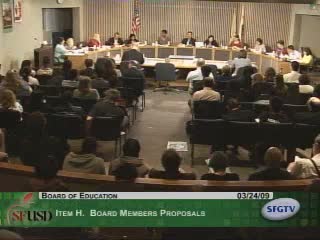
The San Francisco Unified School District board on March 24 adopted a resolution titled “Feeding every hungry child in SFUSD” that directs sites to improve meal-application return rates, reduce cash shortages in the student nutrition program and protect students from being denied a meal because of inability to pay.
The resolution instructs schools to work toward a high return rate for free- and reduced-price meal applications (the board discussed and moved toward a realistic district goal in the 85–95% range and added district incentives), to provide monthly lists of students without meal applications to site administrators, and to notify parents when students with no application and no money go through the lunch line (with operational details to be phased in as the point-of-sale system is deployed). The measure also adds a requirement that sites include incentives and non-educational consequences rather than punitive measures that would remove instructional time.
Parents, public-health officials and student advocates urged the board to pass the measure, citing rising unpaid meal debt and program cutbacks: ‘‘Students want more food, they want better food, but over time the district has allowed a culture to develop which says that school food is a joke,’’ said parent Donna Waldo during public comment. District nutrition staff warned that continued lax enforcement risks federal and state reimbursements.
Board members and staff discussed enforcement mechanisms, how leftovers and unreimbursable 'seconds' affect reimbursements, and options for supporting school sites, including technical assistance and use of state and federal funding streams. The board approved the resolution by roll call after adopting amendments to add incentives, clarify consequences as non-educational, and set implementation benchmarks.
Staff will report back on implementation steps tied to the district’s point-of-sale rollout and proposed incentive programs for schools that meet return-rate targets.