Get Full Government Meeting Transcripts, Videos, & Alerts Forever!
Get email alerts on the Strategic Plan topic
No spam. Unsubscribe anytime.
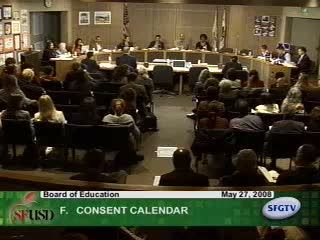
San Francisco school board adopts equity-centered strategic plan, moves to implement school scorecards
Summary
The San Francisco Board of Education unanimously approved a new strategic plan, titled “Beyond the Talk: Taking Action to Educate Every Child Now,” directing the district to develop school- and district-level scorecards and prioritize equity-centered professional learning.
The San Francisco Board of Education voted to adopt a new districtwide strategic plan aimed at closing achievement gaps and making equity a central organizing principle for the San Francisco Unified School District.
The plan, described by staff as a balanced-scorecard framework, calls for K–12 program pathways, the expansion of newcomer supports, increased use of standards-aligned primary-language materials, and a commitment to build a student information system for longitudinal monitoring. Dr. Tony Smith, who led the drafting process, told the board the plan re-frames the achievement gap as a civil-rights issue and asks the entire district to redesign itself to improve outcomes for African American, Latino and other historically underserved students.
Board members praised the plan’s ambition but sought clarifying language and assurances on implementation. Commissioners pressed for fiscal analysis and for more detail on how the plan would be implemented at school sites. Commissioner Winns proposed—and the board accepted—clarifying amendments that emphasize the board’s support for the superintendent’s intention to “continuously refine and vigorously implement” the plan, including creation of school-site scorecards and instructional changes to meet plan goals.
Supporters said the approach gives principals, teachers and community partners a clearer set of expectations and tools. Dr. Smith said the district will pilot observation protocols, train staff, and use the scorecards to measure implementation fidelity. He said the initial phase is intended to be dynamic and revised annually.
The board took a roll-call vote and approved the plan, signaling the district will begin developing the tools and the monitoring systems described in the document. The adoption advances a multi-year effort the district expects to pair with community engagement and annual updates.