Get Full Government Meeting Transcripts, Videos, & Alerts Forever!
Get email alerts on the Contracts topic
No spam. Unsubscribe anytime.
Board approves several contracts and consultant work; staff to provide follow-up details
Summary
The board approved contracts including a $25,000 Edgewood assessment contract, a $500 lecture contract supporting Teaching American History programming, and a $12,000 amendment for student-assignment simulations; commissioners asked for invoices, scope details and participation numbers.
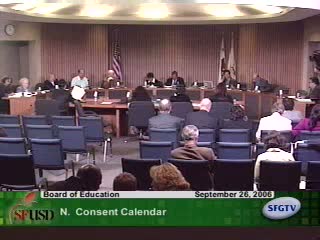
On Sept. 26 the San Francisco Unified School District Board of Education approved multiple contract items and asked staff for clarifying documentation on scope, participation and invoices.
Commissioner Mark asked about a $12,000 amendment/waiver to continue work with consultant Jeff Filling (a former WestEd staffer) to run diversity index lottery simulations, perform post-run analysis and help develop new student-assignment options during a transition period. Chief Administrative staff said internal capacity to run the simulations is limited; the consultant invoices tasks and charges $100 an hour, and staff said they will provide itemized invoices and contract specifications on request.
Commissioner Marr questioned a $25,000 contract with Edgewood Center under Title I funds for assessment work and confirmation that the assessments are being performed by consultant Judith Brennan at the Edgewood site; staff confirmed the consultant conducts standardized assessments at Edgewood and said the curriculum committee will receive forthcoming information on services for severely disabled students.
Marr also asked about a $500 contract supporting a lecture by Professor Ariella Gross (USC) offered on Constitution Day as part of the Teaching American History grant; staff said the lecture supported teacher professional development tied to the grant and that participation numbers would be provided.
Each of the contracts (K19, K20, K39) was moved, seconded and approved by roll call. Board members asked staff for invoices, participation counts and scope documents so they could evaluate consultant value and potential internal capacity to perform similar work in the future.