Get Full Government Meeting Transcripts, Videos, & Alerts Forever!
Get email alerts on the Enforcement topic
No spam. Unsubscribe anytime.
Planning Commission approves Noe Valley conditional use authorization after enforcement audit; owner alleges prior permitting corruption
Summary
The commission approved a conditional use authorization to legalize excess excavation and a horizontal addition at a Noe Valley home (increase from 3,405 to 3,965 sq ft), while hearing allegations from the homeowner about corrupt permitting practices and staff descriptions of DBI audits and a need for legislative fixes. The vote was unanimous, 6-0.
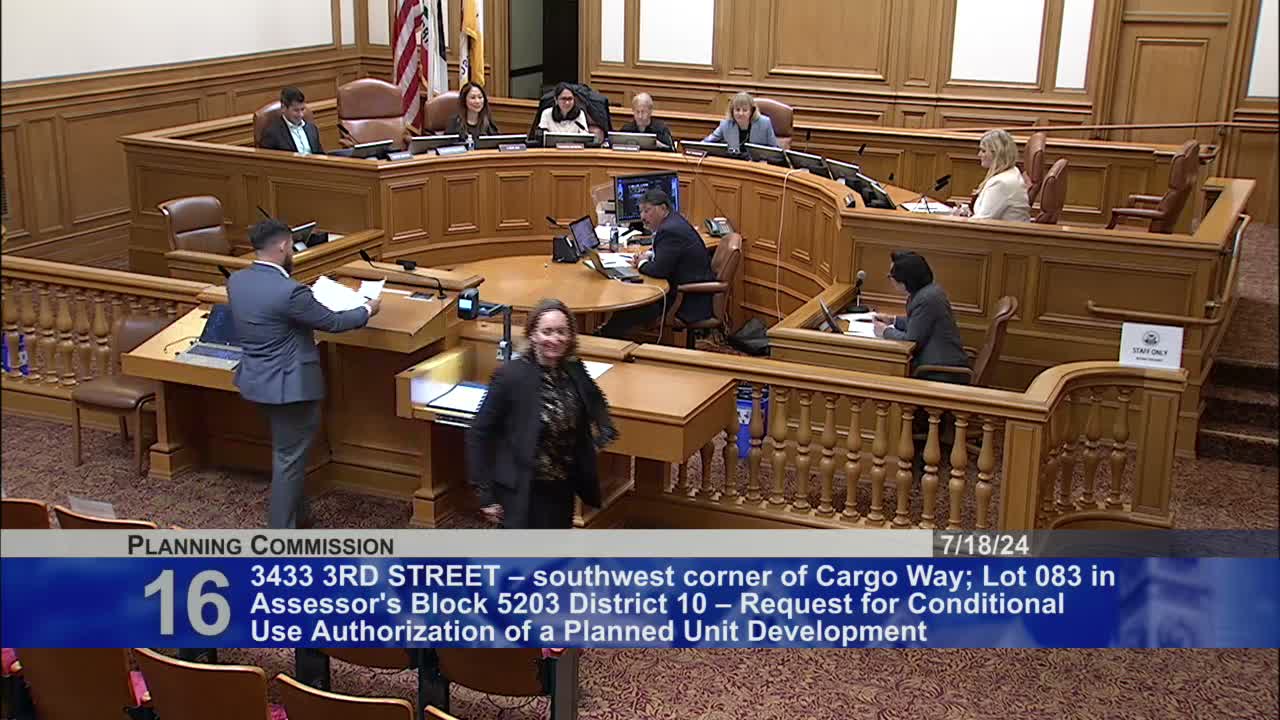
The Planning Commission on July 18 approved a conditional use authorization to legalize excess basement excavation and a horizontal addition at a Noe Valley single-family home, permitting the expansion of gross floor area from approximately 3,405 square feet to 3,965 square feet. Planning staff said the work was completed in 2017 and later discovered during a 2023 audit by the Department of Building Inspection (DBI); the commission voted unanimously, 6-0, to approve the CUA with conditions.
John Dacey of the planning department presented the project and explained that, pursuant to the Central Neighborhoods Large Residence Special Use District, any gross floor area resulting from construction performed without a valid permit is subject to regulation. The department received one letter of support from the Dolores Heights Improvement Club and found the project consistent with general-plan policies after required corrections and conditions.
Homeowner Kim Albright described the ordeal since a February 2023 notice of enforcement, saying she and her husband purchased the property in 2022 and were unaware of the prior work. Albright alleged that "this mistake" was caused by "two corrupt people" involved in earlier permitting and said the family has borne substantial expense, time and stress to resolve it. Her attorney, Robert Martin, argued the applicants relied on permits issued earlier and urged the commission to grant a CUA as an appropriate remedy.
Planning staff and commissioners discussed that the broader pattern tied to particular reviewers has prompted the city and DBI to conduct comprehensive audits with the City Attorney’s Office. Staff said they are working on potential legislative or procedural solutions to give innocent buyers more streamlined relief; multiple commissioners urged that a legislative fix be prioritized to avoid placing the burden on buyers.
The commission approved the conditional use authorization and asked staff to continue work with other departments and the City Attorney’s Office on audit results and possible legislative remedies. The decision allows the applicant to regularize the existing condition under planning code and move toward final permitting steps.