Get Full Government Meeting Transcripts, Videos, & Alerts Forever!
Get email alerts on the Urban Development topic
No spam. Unsubscribe anytime.
Planning department outlines summer timeline to inventory office conversions under Prop C
Summary
Zoning staff told the Planning Commission on June 20 that it will draft an inventory this July of office conversions and demolitions (10,000+ sq ft since 1986) to be reviewed publicly and finalized by Aug. 30, as required by Prop C; the commission weighed questions about methodology and housing impacts.
Lede: The San Francisco Planning Department on June 20 set a tight summer schedule to identify office conversions and demolitions that Prop C requires be returned to the city’s large office allocation pool.
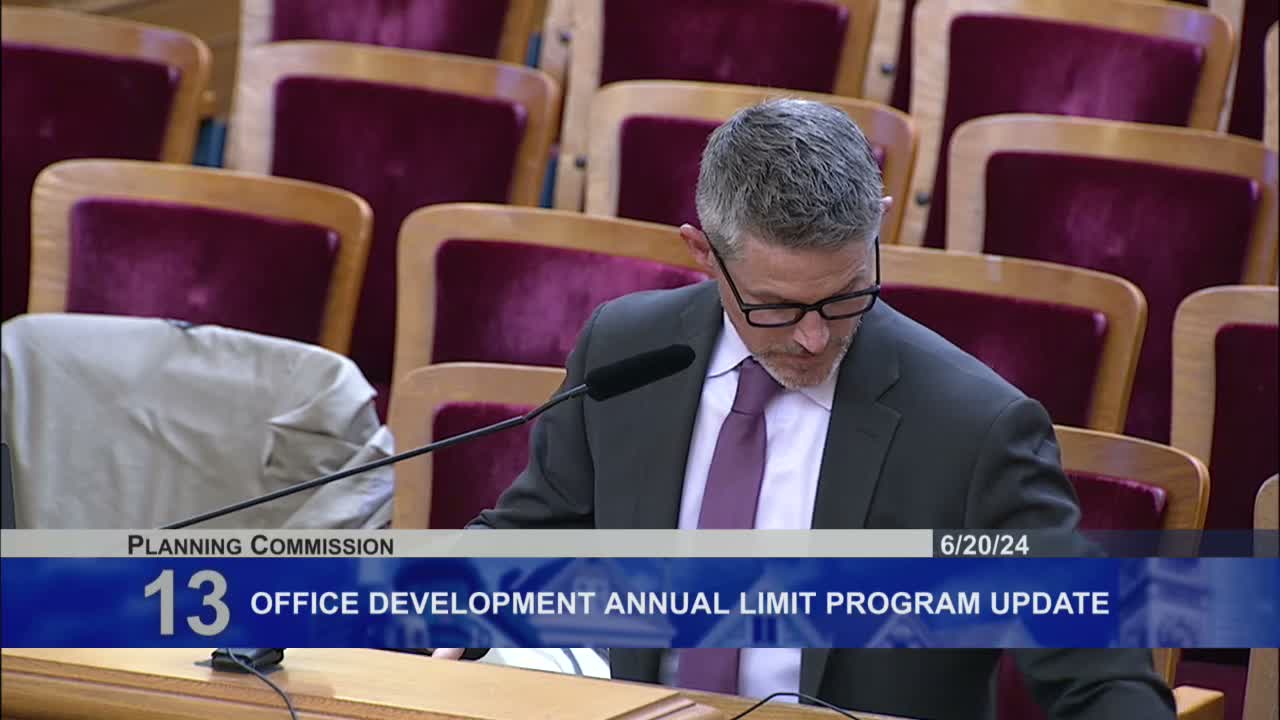
Nut graf: Zoning Administrator Corey Teague told the Planning Commission the department will publish a draft inventory in early to mid‑July, open it to roughly a month of public review, and issue a final list no later than Aug. 30 so the item is in place by the Prop C deadline. “The zoning administrator has until September first of this year to publish an inventory,” Teague said during the presentation.
Body: Teague described the office development annual limit program as a citywide allocation mechanism that distinguishes small‑cap projects (25,000–49,999 sq ft) and large‑cap projects (50,000+ sq ft) and explained how Prop C changes treatment of conversions and demolitions. Under the new process, office space demolished or converted since 1986 that can be documented at 10,000 square feet or more will be added back into the large‑cap pool.
Commissioners asked detailed questions about the method staff will use to identify projects, whether state or federal conversions count, and how the change interacts with Prop E’s RHNA‑linked allocation formula. Teague said the department is using “anything and everything available” including internal records, Department of Building Inspection data, redevelopment and port project lists, and outreach to brokers and industry stakeholders to compile leads, and that state and federal conversions would be captured if they counted as office under the original Prop M definition.
Several commissioners and public commenters urged the department to make the draft inventory available for a commission hearing so the public can comment in person. Teague said that step is possible and that the zoning administrator will publish the draft and solicit feedback through the program’s email list and the Planning Department website.
Ending: The department emphasized the inventory will be updated in future years if additional eligible conversions or demolitions are identified; commissioners requested the results be presented back to the Planning Commission after the public review period.