Get Full Government Meeting Transcripts, Videos, & Alerts Forever!
Get email alerts on the Symphony Chorus topic
No spam. Unsubscribe anytime.
Symphony chorus members urge Arts Commission to press management after strike cancels season opener
Summary
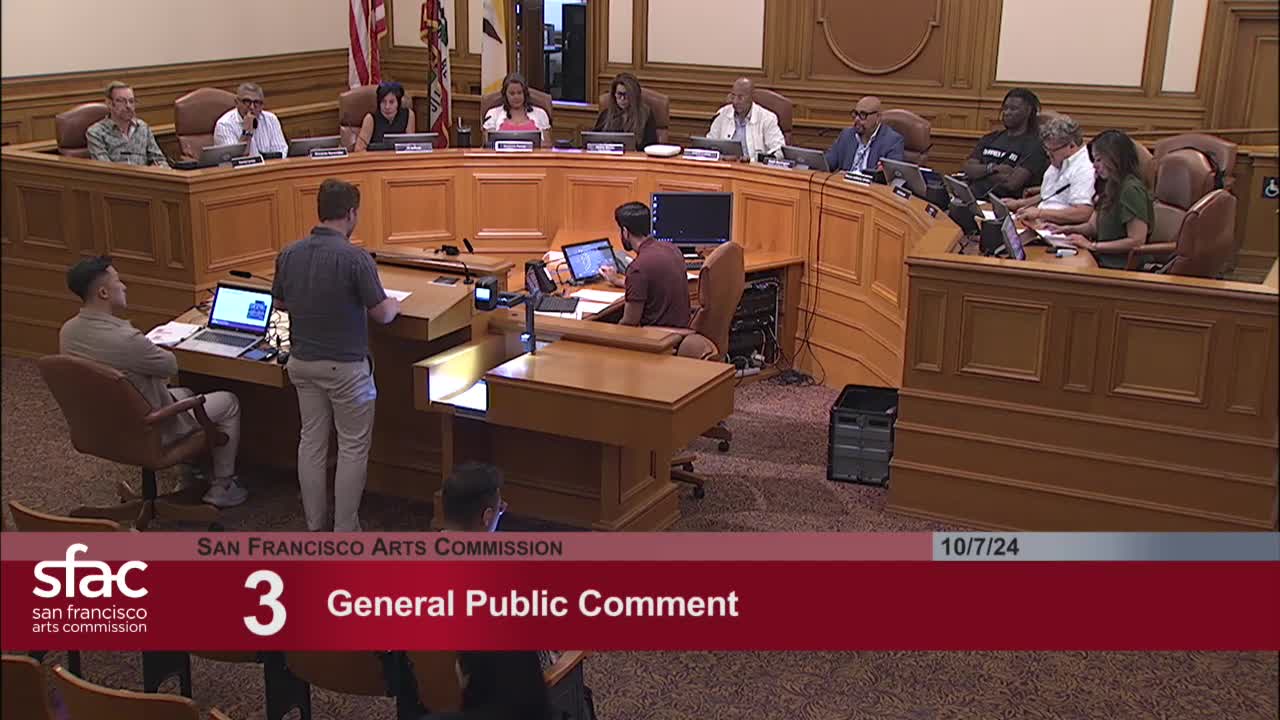
Members of the San Francisco Symphony Chorus told the Arts Commission Oct. 7 that last-month strike action and a management decision to cancel three opening concerts have jeopardized choristers’ pay and called for the commission to press Symphony leadership to bargain in good faith.
Members of the San Francisco Symphony Chorus and volunteer singers appealed to the San Francisco Arts Commission on Oct. 7 to intervene after AGMA-represented choristers went on strike and the Symphony canceled three opening concerts, including a much-anticipated performance of Verdi’s Requiem.
Todd Bradley, a 15-season chorus member, said the chorus had been prepared to perform but found itself picketing outside Davies Symphony Hall after management canceled the concerts less than two hours before curtain. Bradley said management’s public statements blaming the union were “misleading at best” and described advance bargaining offers he said would have cut chorister guarantees by an intolerable amount.
Diana Pray, an AGMA member and longtime chorister, said the cancellations deprived more than 5,000 ticket holders of the chance to see the concert and that the Symphony’s decision cost an estimated three-quarters of a million dollars. She said most paid musicians and crew were paid under cancellation clauses, while volunteer and AGMA choristers were left unpaid.
Several other speakers, including Carolyn Alexander, Paul Angelo and Eliot Incarnacion, described solidarity among volunteer singers and professional musicians, and said AGMA has filed an unfair labor practice charge alleging the Symphony refused to bargain in good faith. Incarnacion urged the Arts Commission to press Symphony leadership for transparency about endowment management and fundraising decisions and to demand the board and CEO explain why cuts to chorister pay were proposed instead of other budget measures.
Speakers described negotiations that began in May and said management returned to bargaining with an offer they characterized as a freeze or severe cuts to guarantees. At least one speaker said management declined to provide budgetary projections to the union during negotiations.
The public comments framed the dispute as both a labor and civic issue: speakers argued that an underpaid chorus endangers the broader Bay Area arts ecosystem because paid choristers support many other local ensembles, and they asked the Arts Commission to use its convening power to encourage the Symphony Board to resume negotiations.
No Symphony management representative addressed the commission during the public comment period to respond to the allegations. The Arts Commission did not take formal action on the matter at this meeting; public comment was recorded in the meeting minutes.